
Steven Fazzari (@fazzaristeven) 's Twitter Profile
Steven Fazzari

@fazzaristeven

Professor of economics and sociology at Washington University in St. Louis. I study macroeconomics and the US economy from a Keynesian perspective.

ID: 1369052971053559816

linkhttps://sites.wustl.edu/fazz/ calendar_today08-03-2021 22:30:53

21 Tweet

702 Takipçi

21 Takip Edilen

Steven Fazzari (@fazzaristeven) 's Twitter Profile Photo

Ella Needler and I have just finished a paper comparing employment inequality in the Great Recession and the COVID-19 crisis. We explore: gender, race/ethnicity, age, education. Women and lower education groups are hit much harder in the COVID crisis. sites.wustl.edu/fazz/papers/

Steven Fazzari (@fazzaristeven) 's Twitter Profile Photo

The federal rescue bill passed the House. Biden will sign it. Good! Here are my thoughts about the package from almost 2 months ago: ineteconomics.org/perspectives/b…

Ella Needler (@ellaneedler) 's Twitter Profile Photo

Hey #EconTwitter! I’ve got some research to share. My professor Steven Fazzari and I compared unemployment inequities during the Covid and Great recessions for groups based on gender, race, age and educ. Covid is different and women/less educated are getting hit hard. /1

Steven Fazzari (@fazzaristeven) 's Twitter Profile Photo

Important observations from EPI on state/local funds in the ARP. Look at figure A. Much of what state/local governments need is the result of anemic growth prior to the pandemic. epi.org/blog/the-ameri… I make a related point in my Jan. 19 INET article.

Steven Fazzari (@fazzaristeven) 's Twitter Profile Photo

Very important. Yes, the US unemployment rate fell to low levels before COVID. But the US economy never came close to recovering its pre-Great Recession trend. Also, it never came close to matching pre-Great Recessions "potential" output forecasts.

Sebastian Gechert@sgechert.bsky.social (@sgechert) 's Twitter Profile Photo

Hurray! Together with great coauthors Dominika Ehrenberger, Tomas + Zuzana we finally got it published: Our #metaanalysis on the elasticity of substitution b/w capital and labor, a.k.a. the “Death to the Cobb-Douglas production function” made it to the Review of Economic Dynamics. Thread:

Hurray! Together with great coauthors <a href="/DomiEhrenberger/">Dominika Ehrenberger</a>, Tomas + Zuzana we finally got it published: Our #metaanalysis on the elasticity of substitution b/w capital and labor, a.k.a. the “Death to the Cobb-Douglas production function” made it to the <a href="/RevEconDyn/">Review of Economic Dynamics</a>. Thread:
Steven Fazzari (@fazzaristeven) 's Twitter Profile Photo

Nice work by Sebastian [email protected] and friends reminded me of an old obscure paper. Seems like I had it pretty much right in 1998! Maybe 21st century social media will make "Capital Income Taxes and Economic Performance" more popular. sites.wustl.edu/fazz/papers/ (at the bottom)

Steven Fazzari (@fazzaristeven) 's Twitter Profile Photo

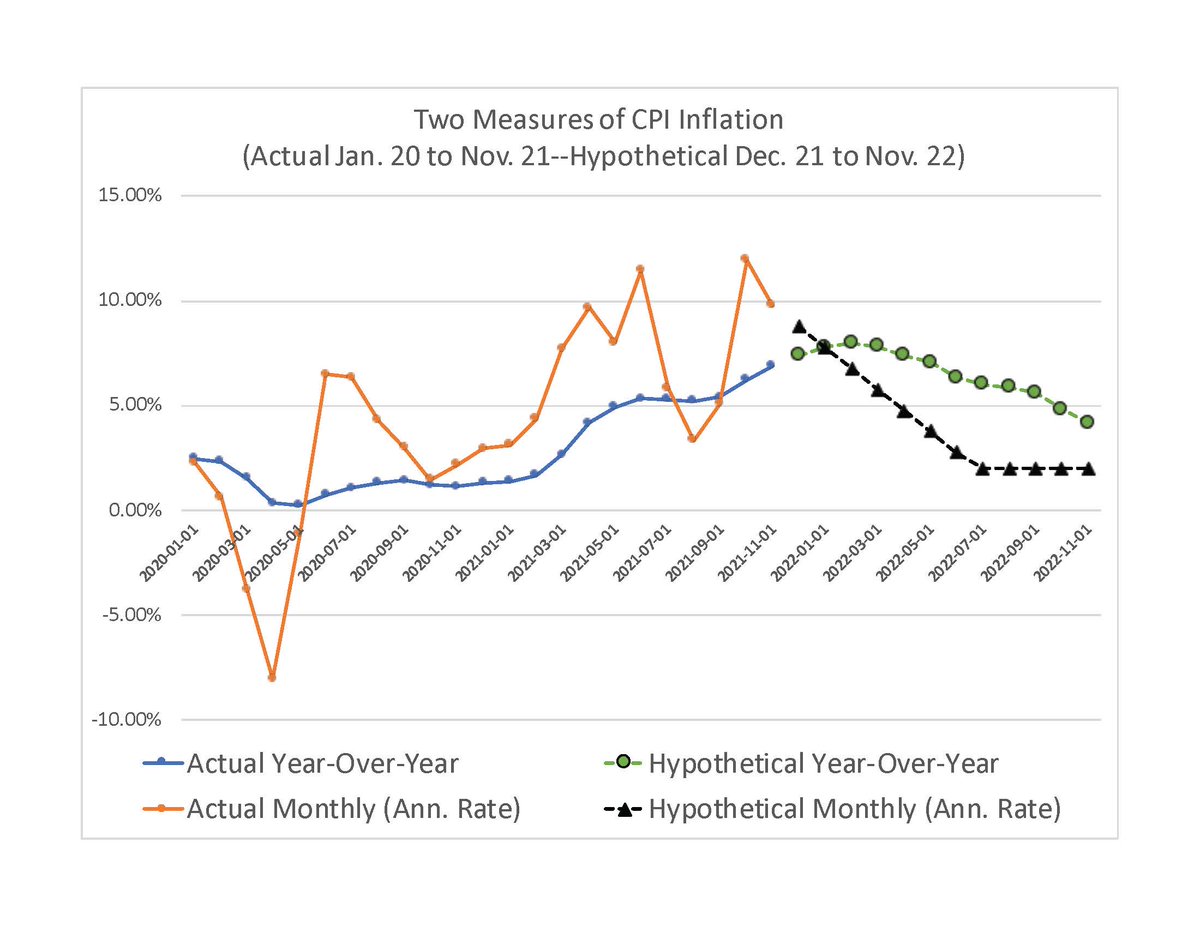
Year over year (Y/Y) measures can be misleading. If monthly CPI inflation were to fall one percentage point (annual rate) every month starting in 12/21 until it hit 2%, Y/Y measure would still keep rising through 3/22 and stay above 5% through 9/22.

Year over year (Y/Y) measures can be misleading. If monthly CPI inflation were to fall one percentage point (annual rate) every month starting in 12/21 until it hit 2%, Y/Y measure would still keep rising through 3/22 and stay above 5% through 9/22.
Steven Fazzari (@fazzaristeven) 's Twitter Profile Photo

We have lost another insightful economist and a truly decent person. I strongly recommend Josh Mason's summary of Jim Crotty's contributions.

Alejandro Gonzalez (@alejandroph_c) 's Twitter Profile Photo

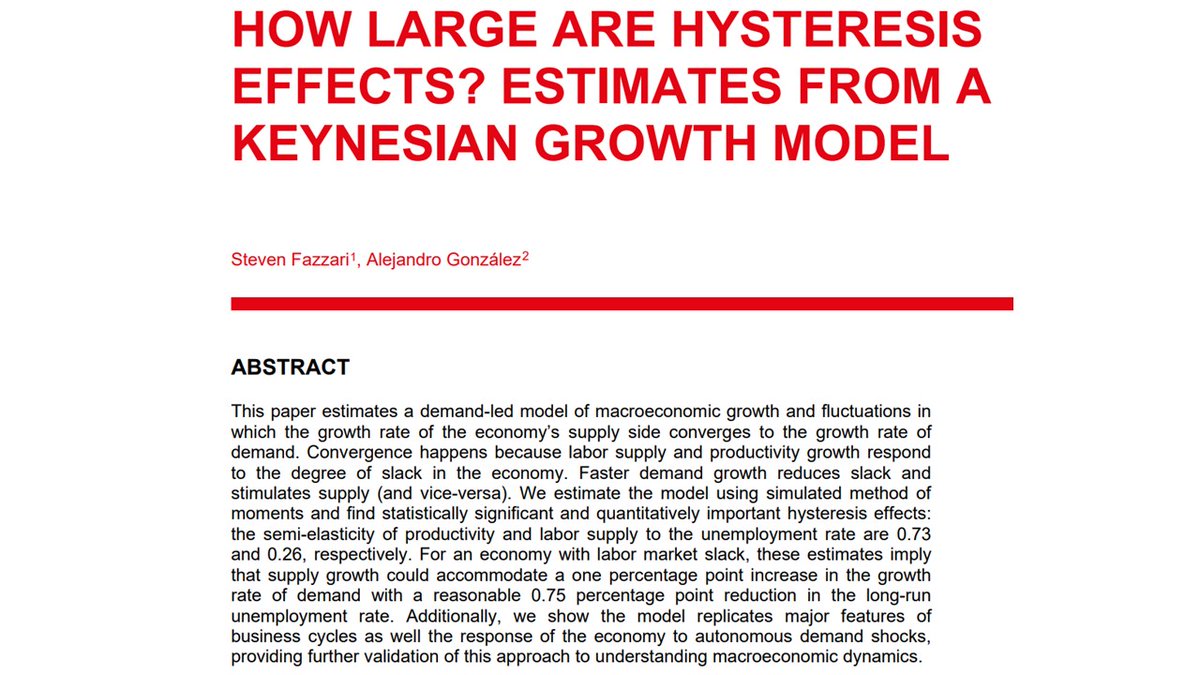
🚨 New Working Paper Alert 🚨 Can higher demand growth stimulate productivity growth and labor supply growth? If so, by how much? In this new paper co-authored with Steven Fazzari, we show that the answer is 'Yes, a lot'. Link and short thread below!
🚨 New Working Paper Alert 🚨

Can higher demand growth stimulate productivity growth and labor supply growth? If so, by how much? 
In this new paper co-authored with <a href="/FazzariSteven/">Steven Fazzari</a>, we show that the answer is 'Yes, a lot'. 

Link and short thread below!
Steven Fazzari (@fazzaristeven) 's Twitter Profile Photo

Thanks for the shout out. Minor cringe when I see "excess saving" or "saving glut." There is no "saving" without corresponding expenditure defined as something besides consumption. To me, "excess saving" means deficient demand. Data updated through 2020: sites.wustl.edu/householdcashf….

Steven Fazzari (@fazzaristeven) 's Twitter Profile Photo

New paper from my long-lasting project with Barry Cynamon and Daniel Cooper that develops and implements a comprehensive measure of American household economic well-being. Barry's tweet summarizes some key takeaways.