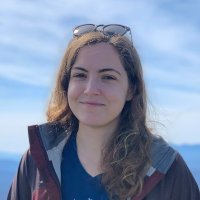
Daphne Kontogiorgos-Heintz (@daphnekheintz) 's Twitter Profile
Daphne Kontogiorgos-Heintz

@daphnekheintz

CS PhD student at @UW working on ML for single-molecule protein sequencing with @datamolecules | Prev @Penn BE and CIS

ID: 1468745867419164678

calendar_today09-12-2021 00:54:45

24 Tweet

65 Takipçi

366 Takip Edilen
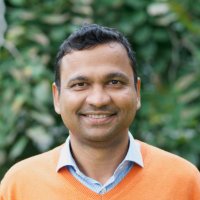
Kiran Raosaheb Patil (@kiran_r_patil) 's Twitter Profile Photo

>95% have forever chemicals #PFAS in blood. PFAS are linked to cancer, infertility, dev & immune issues. We now have a tool to sharpen to get rid of this poison of the century from body! Our preprint on PFAS bioaccumulation by human gut bacteria! 🧵(1/8) biorxiv.org/content/10.110…

TDCC @genometdcc.bsky.social (@genometdcc) 's Twitter Profile Photo

There's a buzz around Multi-pass, Single-Molecule Nanopore Reading of Long Protein Strands, a recent nature publication from Jeff Nivala, Keisuke Motone / 元根 啓佑, Daphne Kontogiorgos-Heintz and colleagues. Watch this publication highlight where they discuss their work! youtube.com/watch?v=aaE7kZ…


Keisuke Motone / 元根 啓佑 (@keisukemotone) 's Twitter Profile Photo

Great article featuring recent updates on nanopore-based protein analyzers being developed by both academic and industry-affiliated research groups. "at least one company, Portal Biotech, has begun to place nanopore-based protein analyzers in the hands of early adopters."

Rafeeque Mavoor (@rafeequemavoor) 's Twitter Profile Photo

Free scientific illustrations for biologists! 😍 NIH has released a library of 500+ free scientific illustrations to create figures, presentations, and illustrations! all freely available in the public domain. Retweet and spread the message! bioart.niaid.nih.gov

Free scientific illustrations for biologists! 😍

<a href="/NIH/">NIH</a> has released a library of 500+ free scientific illustrations  to create figures, presentations, and illustrations!   

all freely available in the public domain. 

Retweet and spread the message!
bioart.niaid.nih.gov
Nature Methods (@naturemethods) 's Twitter Profile Photo

Research highlight by Dr. Arunima Singh: A multi-pass nanopore for single-molecule protein sequencing from Jeff Nivala from University of Washington allowed rereading the same peptide strand multiple times providing higher resolution readouts. Highlight: nature.com/articles/s4159…

Research highlight by <a href="/DrArunimaSingh/">Dr. Arunima Singh</a>: A multi-pass nanopore for single-molecule protein sequencing from <a href="/jeffnivala/">Jeff Nivala</a> from <a href="/UW/">University of Washington</a> allowed rereading the same peptide strand multiple times providing higher resolution readouts.

Highlight: nature.com/articles/s4159…
Nature Reviews Bioengineering (@natrevbioeng) 's Twitter Profile Photo

Protein sequencing is key to understanding cellular signalling pathways and metabolic processes. In their Review, cees dekker - also at @ceesdekker.bsky.social et al discuss how nanopores enable single-molecule protein sequencing and the identification of post-translational modifications go.nature.com/40ZutV0
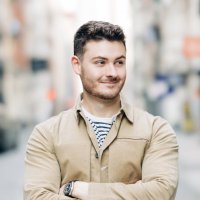
Simon Barnett (@simondbarnett) 's Twitter Profile Photo

Last week, Reha Mathur, Bauer LeSavage, and I attended several ML + Biology workshops at #neurips2024. We've compiled our workshop notes as a community resource. Enjoy! tinyurl.com/3esnu2fw


Last week, <a href="/RehaMathur/">Reha Mathur</a>, <a href="/bauer_lesavage/">Bauer LeSavage</a>, and I attended several ML + Biology workshops at #neurips2024. 

We've compiled our workshop notes as a community resource.

Enjoy!

tinyurl.com/3esnu2fw
Oxford Nanopore (@nanopore) 's Twitter Profile Photo

Following the announcement of our first speaker Jeff Nivala, we’re happy to announce early bird tickets for London Calling 2025, are now available. Make sure to purchase before 19th Jan to avoid the price increase. Get your ticket here: nanoporetech.com/about/events/c… #nanoporeconf
Michael Baym (@baym) 's Twitter Profile Photo

In the right conditions, antibiotic resistance can happen extremely fast. Here is an example from my own work of bacteria overcoming an antibiotic in just eleven days in a giant petri dish: 1/

Anshul Kundaje (anshulkundaje@bluesky) (@anshulkundaje) 's Twitter Profile Photo

Sara Mostafavi (Genentech ) & I (Stanford University) r excited to announce co-advised postdoc positions for candidates with deep expertise in ML for bio (especially sequence to function models, causal perturbational models & single cell models). See details below. Pls RT 1/


<a href="/sara_mostafavi/">Sara Mostafavi</a> (<a href="/genentech/">Genentech</a> ) &amp; I (<a href="/Stanford/">Stanford University</a>) r excited to announce co-advised postdoc positions for candidates with deep expertise in ML for bio (especially sequence to function models, causal perturbational models &amp; single cell models). See details below. Pls RT 1/
Chan Zuckerberg Biohub Network (@czbiohub) 's Twitter Profile Photo

🚫 No dyes. No bleaching. 🔬 Just AI + label-free microscopy = vivid virtually stained images New in Nature Machine Intelligence: A deep learning model that enables robust virtual staining across microscopes, cell types & conditions. #CZBiohubSF Shalin Mehta explains:


Jeff Nivala (@jeffnivala) 's Twitter Profile Photo

Hybridization-encoded DNA tags with paper-based readout for anti-forgery raw material tracking | Nature Communications nature.com/articles/s4146…

Jeff Nivala (@jeffnivala) 's Twitter Profile Photo

We searched for Bigfoot using CRISPR. DNA storage meets CRISPR search: AI maps the data, Cas9 slices it, nanopores read it. Multiplexed molecular search with semantic retrieval across a database of DNA-encoded images. Off-targets = a feature, not a bug. tinyurl.com/mr34c7fh

Niko McCarty 🧫 (@nikomccarty) 's Twitter Profile Photo

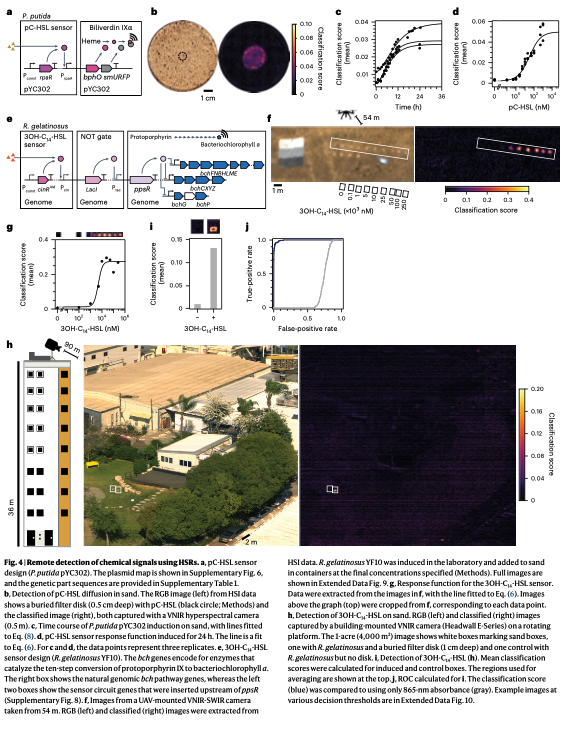
This is one of the most underrated papers from the last few months. TL;DR: MIT scientists engineered bacteria that can be seen from hundreds of feet away, using drones or satellites, with hyperspectral cameras. Here is how they did it. > First, they filtered through a database

This is one of the most underrated papers from the last few months.

TL;DR: MIT scientists engineered bacteria that can be seen from hundreds of feet away, using drones or satellites, with hyperspectral cameras.

Here is how they did it.

&gt; First, they filtered through a database
Phil Leung (@definitelyphil) 's Twitter Profile Photo

Glad to see our antibody design paper finally out in nature (and congrats to lead authors and everyone involved )! At XairaTherapeutics we are excited about pushing antibody design further to bind harder targets and make drugs for unmet medical needs. Paper: nature.com/articles/s4158…


Glad to see our antibody design paper finally out in <a href="/Nature/">nature</a> (and congrats to lead authors and everyone involved )!
At <a href="/Xaira_Thera/">XairaTherapeutics</a> we are excited about pushing antibody design further to bind harder targets and make drugs for unmet medical needs.
Paper:
nature.com/articles/s4158…

The Seattle Times (@seattletimes) 's Twitter Profile Photo

Tim Leiweke was pardoned by the president on Tuesday, months after a federal indictment on bid-rigging charges involving the University of Texas at Austin. st.news/4pNJimT

Google Research (@googleresearch) 's Twitter Profile Photo

Today at #NeurIPS2025, we present Titans, a new architecture that combines the speed of RNNs with the performance of Transformers. It uses deep neural memory to learn in real-time, effectively scaling to contexts larger than 2 million tokens. More at: goo.gle/3Kd5ojF

Today at #NeurIPS2025, we present Titans, a new architecture that combines the speed of RNNs with the performance of Transformers. It uses deep neural memory to learn in real-time, effectively scaling to contexts larger than 2 million tokens. More at: goo.gle/3Kd5ojF