Dries Bostyn (@dhbostyn) 's Twitter Profile
Dries Bostyn

@dhbostyn

Moral Psychologist | Dilemma lover | Statistician @ Ghent University | Fulbright Alumnus. Science tweets in English, Complainy Belgian tweets in Dutch.

ID: 3888332243

linkhttp://dhbostyn.com calendar_today07-10-2015 08:22:09

2,2K Tweet

1,1K Takipçi

768 Takip Edilen

Konrad Bocian (@konradbocian) 's Twitter Profile Photo

Why do we want to be moral yet resist moral criticism? Sept 9, 9:00–10:30 CEST Keynote by Prof. Naomi Ellemers (Utrecht Univ.) “The Paradox of Morality” SWPS Sopot + livestream 🌍 🔗 english.swps.pl/we-the-univers… SWPS University EASP Narodowe Centrum Nauki

Carme Isern-Mas (@isernmas) 's Twitter Profile Photo

What People Think Self-Deception Is and Why Philosophers Should Care A summary of our x-phi paper (w/ Moral Science Lab ) in the terrific Imperfect Cognitions blog. 🙌
Dries Bostyn (@dhbostyn) 's Twitter Profile Photo

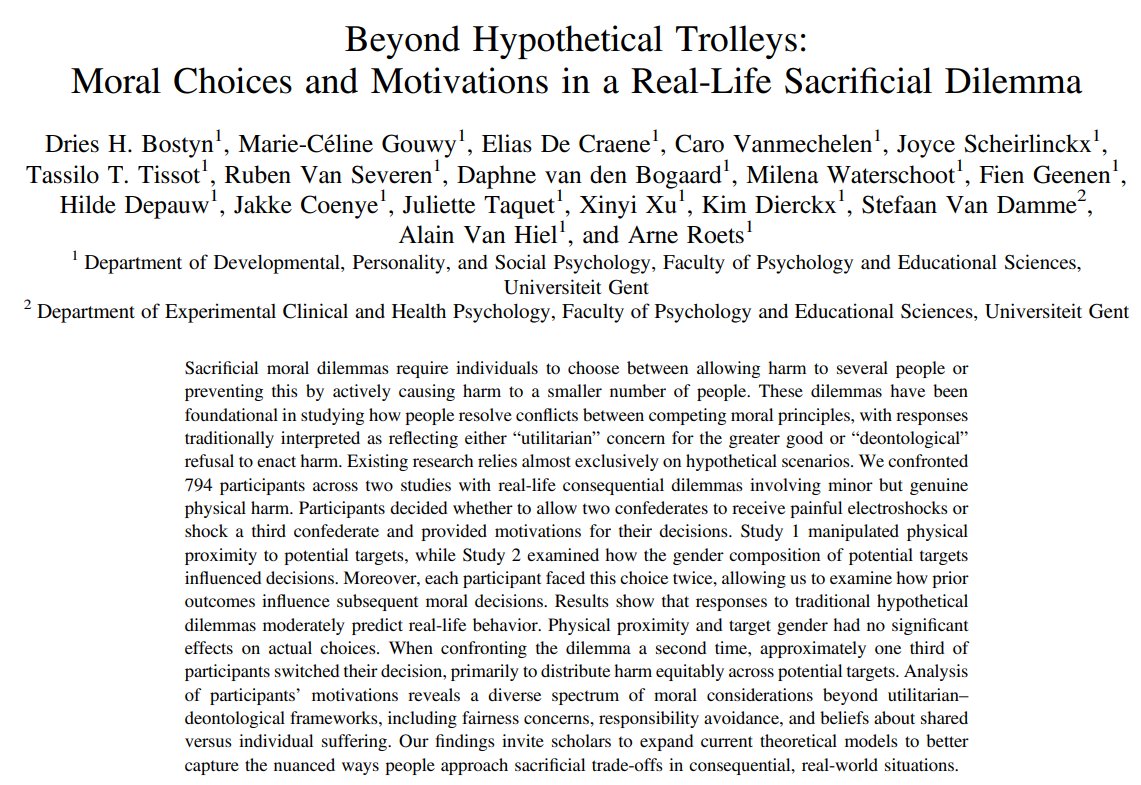
Upcoming in JPSP Psychologists study morality by having people respond to hypothetical "trolley dilemmas". We confronted people with a real-life version. Not with runaway trolleys, but with people hooked up to electroshock machines: "Do you want to save two people from pain by

Upcoming in JPSP

Psychologists study morality by having people respond to hypothetical "trolley dilemmas". We confronted people with a real-life version. Not with runaway trolleys, but with people hooked up to electroshock machines: "Do you want to save two people from pain by
xavier roberts-gaal (@xave_rg) 's Twitter Profile Photo

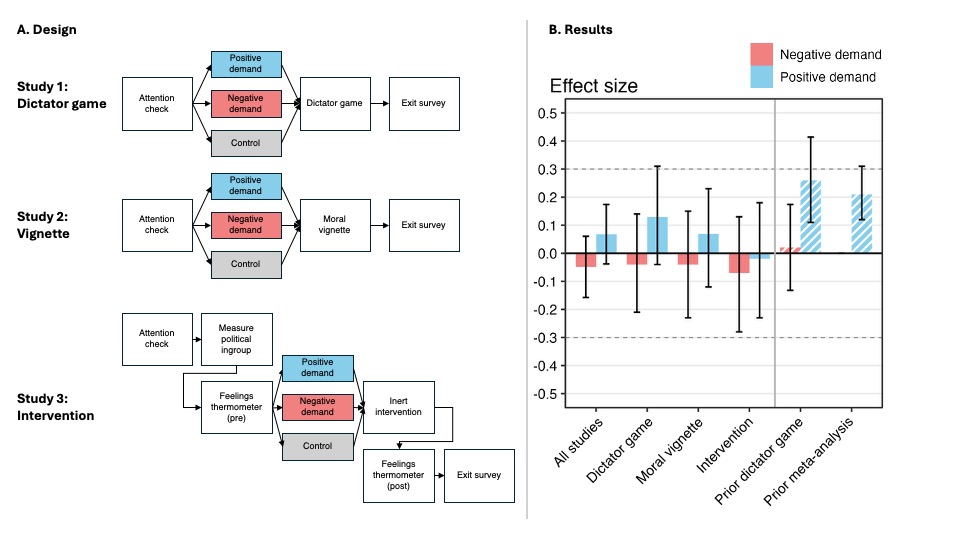
We often hear from reviewers: "what about demand effects?" So we developed a method to eliminate them. Something weird happened during testing: We couldn’t detect demand effects in the first place! (1/8)

We often hear from reviewers: "what about demand effects?" So we developed a method to eliminate them. Something weird happened during testing: We couldn’t detect demand effects in the first place! (1/8)
Vlad Chituc is on bsky (@vladchituc) 's Twitter Profile Photo

Thrilled to announce a new paper out this weekend in Cognition. Moral psychologists almost always use self-report scales to study moral judgment. But there's a problem: the meaning of these scales is inherently relative. A 2 min demo (and a short thread): 1/7