DACH+ Energy Informatics
@dacheninf
We are the official Twitter channel of the DACH+ Energy Informatics conference. Submission deadline is April 22th.
Info: energy-informatics2022.org
ID: 1467818160875261960
06-12-2021 11:29:22
29 Tweet
60 Takipçi
76 Takip Edilen

Our last paper out of the machine learning session comes from the group of Astrid Nieße at @UniOldenburg. They propose reinforcement learning approaches to identify vulnerabilities in electricity systems. which helps to overcome flawed market designs. energyinformatics.springeropen.com/articles/10.11…
The next one is a collaboration between Fraunhofer ISE, Universität Ulm and Greenventory. They compare short term load forecasting techniques for various building types. They specifically differentiate between schools, residential buildings and supermarkets. energyinformatics.springeropen.com/articles/10.11…
Moving on further north and a further west to RWTH Aachen. This paper analyses multi-energy systems on a municipal level. The authors consider gas, heat and electricity infrastructure and optimize the system costs while respecting a constraint emissions budget. energyinformatics.springeropen.com/articles/10.11…
This collaboration between Switzerland and Germany, comes from the group of @LehnhOFFIS from OFFIS and @UniOldenburg together with EPFL and focused on socio-technical modeling using mosaik, a co-simulation tool and demod, an open-source python library energyinformatics.springeropen.com/articles/10.11…
Moving on to our session on demand-side flexibility. The 1st paper, again out of #HSOffenburg, deals with the active participation of industry on electricity markets. The authors present a generic model library for the provision of demand side flexibility. energyinformatics.springeropen.com/articles/10.11…
Another German-Swiss collaboration! The authors from ETH Zürich, FAU Erlangen-Nbg and Hitachi Energy minimize the peak loads of e-bus depots. The exact, offline, modular multi-variable mixed-integer linear optimization algorithm helps to optimally plan charging processes.energyinformatics.springeropen.com/articles/10.11…
This paper comes out of TU Darmstadt. The authors focus on heat transfer from industrial plants into district heating networks to decarbonize heat generation. They use an optimization model that is integrated into a digital twin. energyinformatics.springeropen.com/articles/10.11…
This paper comes out of the energy informatics group at Universität Passau. The authors propose a centralized charging capacity allocation mechanism based on queuing systems that takes care of grid limitations and charging requirements of electric vehicles. energyinformatics.springeropen.com/articles/10.11…
Everyone’s talking about blockchain and these researchers from FfE, Universität Bayreuth, Fraunhofer FIT and FIMresearch put it into practice. They propose a scalable blockchain-based data platform that can be used for asset logging in the electricity sector energyinformatics.springeropen.com/articles/10.11…
And here comes a second paper out of the research group Universität Passau. They propose an approach to extract characteristics of solar PV solely from measurement data. This includes panel and inverter peak power, panel orientation, system location and more energyinformatics.springeropen.com/articles/10.11…
Another paper out of Munich from the FfE. This one focuses on indicators that allow for an evaluation of the results of clustering approaches. Using multi criteria decision analysis, the authors propose an approach to combine various measures. energyinformatics.springeropen.com/articles/10.11…
Third time’s a charm! This paper from Universität Passau deals with the creation of realistic models representing both, power systems and the corresponding ICT architecture. The proposed methodology can create such models using openly available data. energyinformatics.springeropen.com/articles/10.11…

Good to see ACM e-Energy planning for hybrid mode with local hubs in these uncertain times. It’s the kind of leadership we need to move into more equitable, inclusive and less carbon burning gatherings for academics. In-person conferences are a thing of the past and need to go.


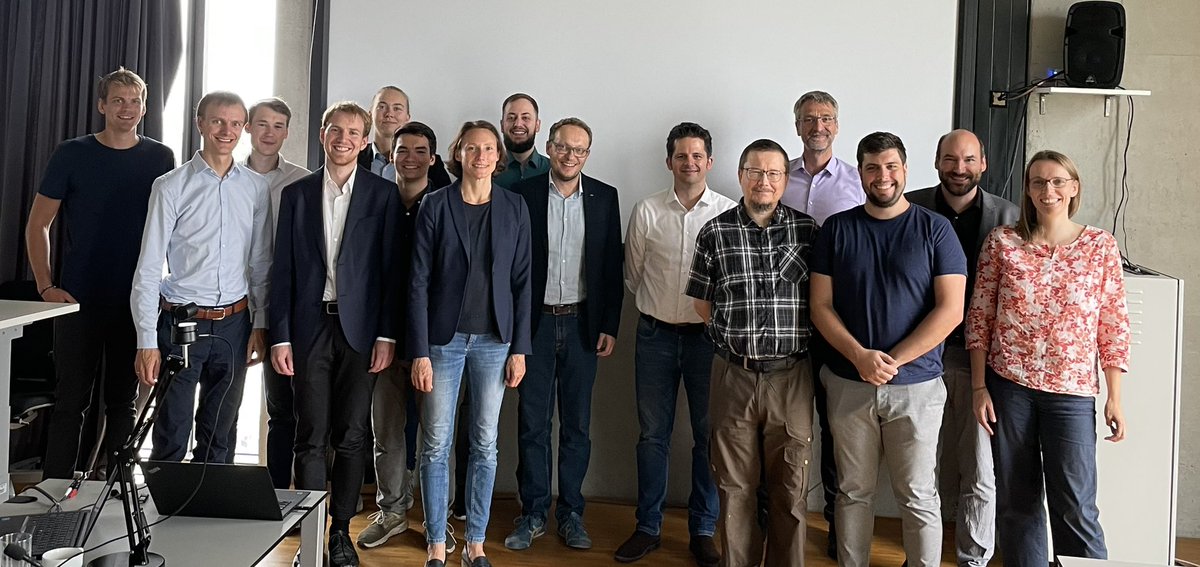
Thanks again to the team of Anke Weidlich Universität Freiburg for hosting us with this year‘s 13th Doctoral Workshop on #energyinformatics at the DACH+ Energy Informatics ! It has been a pleasure to discuss so deeply on new doctoral projects in this field! #energieinformatik