
Rob Bailey (@climaterob) 's Twitter Profile
Rob Bailey

@climaterob

Director - Climate Resilience at Marsh & McLennan Insights. Tweets in a personal capacity about climate change, risk and strategy.

ID: 321870282

linkhttp://www.mmc.com/insights calendar_today22-06-2011 08:10:39

1,1K Tweet

1,1K Followers

515 Following

Rob Bailey (@climaterob) 's Twitter Profile Photo

A3a: How WON’T #climatechange impact people’s health? Experts have called it ‘the greatest threat to human health in the 21st Century’. For a great summary of the different direct and indirect ways, see this article. More: bit.ly/36nMAWD #MMCChat

Rob Bailey (@climaterob) 's Twitter Profile Photo

A3b: Some things are bad for both human health and the #climate. Burning fossil fuels emits GHGs and causes air pollution and respiratory disease. Eating too much meat and dairy contributes to non-communicable diseases and generates enormous emissions. #MMCChat

Rob Bailey (@climaterob) 's Twitter Profile Photo

A4a: In a climate-disrupted world, the sector will need to ensure continuity of care & meet changing healthcare needs. E.g. Providers will need resilient infrastructure & supply chains. Life sciences companies will need to align R&D with evolving disease burdens #MMCChat

Rob Bailey (@climaterob) 's Twitter Profile Photo

A4b: Were the sector a country, it would be the 5th largest emitter in the world. Some efforts to cut emissions could boost resilience; others present trade-offs. More: bit.ly/36nMAWD #MMCChat

Rob Bailey (@climaterob) 's Twitter Profile Photo

A5: Workforce health and safety is a big risk for employers. A climate impact that damages company operations is also likely to harm workers’ health. This becomes a double whammy: strained finances coinciding with a jump in worker healthcare costs. #MMCChat

Rob Bailey (@climaterob) 's Twitter Profile Photo

A7a: Employers can reduce health and safety risks up front, e.g. by modifying work sites and practices to reduce exposure to extreme heat. They can also improve workforce financial well-being – a key determinant of health. #MMCChat

Rob Bailey (@climaterob) 's Twitter Profile Photo

A7b: Employers can also leverage their role as payers, e.g. by designing health & leave benefits to ensure all workers and their families receive necessary care. They can also support universal access to physical and mental healthcare. Read more: bit.ly/36nMAWD #MMCChat

Rob Bailey (@climaterob) 's Twitter Profile Photo

A8a: Climate change will worsen existing health risks – and introduce entirely new ones, like emergent diseases. The health sector is currently a part of the problem, given its emissions. But it can be a crucial part of the solution #MMCChat

Rob Bailey (@climaterob) 's Twitter Profile Photo

A8b: COVID-19 has shown that the best time to prepare for a crisis was yesterday; the second-best time is today. By acting now, the health sector can serve its patients – and avoid making more drastic/expensive changes in the future. #MMCChat

Rob Bailey (@climaterob) 's Twitter Profile Photo

A1 Climate-related disasters are on the rise, damaging assets, disrupting business operations and increasing market volatility. Check out this report from @MarshMcLennan and National Association of Corporate Directors for more details: bit.ly/3whXbOt #MMChats
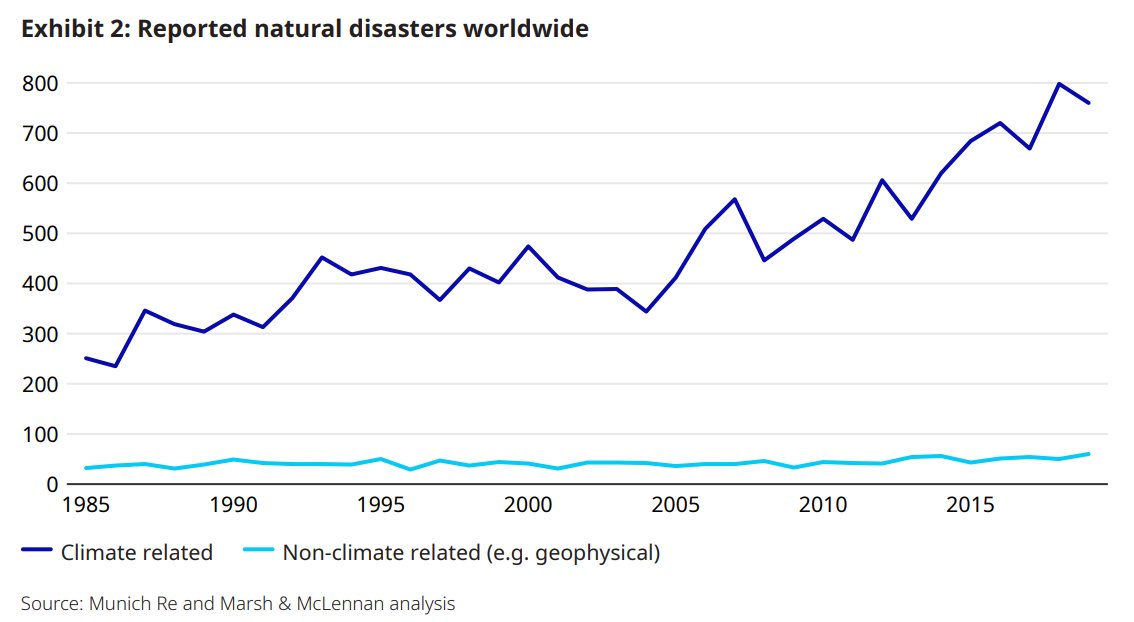
A1 Climate-related disasters are on the rise, damaging assets, disrupting business operations and increasing market volatility. Check out this report from @MarshMcLennan and <a href="/NACD/">National Association of Corporate Directors</a> for more details:
bit.ly/3whXbOt #MMChats
Rob Bailey (@climaterob) 's Twitter Profile Photo

A2 Explore how climate change affects health, the implications, and how different organizations should respond through the @MarshMcLennan Climate Health Threat Navigator mmc.com/climate-health… #MMChats

Rob Bailey (@climaterob) 's Twitter Profile Photo

A3 Integrate climate into enterprise risk management, scenario planning and capex decisions; model NATCAT risks for critical assets and supply chain vulnerabilities; develop preparedness and contingency plans; use insurance to transfer risks #MMChats

Rob Bailey (@climaterob) 's Twitter Profile Photo

A4a Climate change means the cost of insurance for risks like flood and wildfire will increase in certain regions. This is already happening for wildfire risks in California for example. #MMChats

Rob Bailey (@climaterob) 's Twitter Profile Photo

A4b Organizations need to evaluate how their physical climate risks will evolve under climate change, the implications for the price and availability of insurance and feed this into their strategic planning. #MMChats

Rob Bailey (@climaterob) 's Twitter Profile Photo

A4c Organizations and individuals should take steps to build resilience to flood and wildfire risks – this will help make insurance more affordable. #MMChats

Rob Bailey (@climaterob) 's Twitter Profile Photo

A5 Check out the @Marsh Catastrophe Resilience Team’s 5 step approach to building flood resilience and explore some case studies here marsh.com/uk/flooding.ht… #MMChats

A5 Check out the @Marsh Catastrophe Resilience Team’s 5 step approach to building flood resilience and explore some case studies here marsh.com/uk/flooding.ht…  #MMChats
Rob Bailey (@climaterob) 's Twitter Profile Photo

A6 Invest in natural infrastructure to reduce NATCAT risks e.g. mangroves, coral reefs and salt marshes can protect against coastal flood. This research involving @GuyCarpenter found wetlands saved $625m during Sandy #MMChats nature.com/articles/s4159…

Rob Bailey (@climaterob) 's Twitter Profile Photo

A7 Again, invest in restoring natural infrastructure. Mangroves, wetlands and forests can sequester carbon and reduce risks from natural disasters. They’re good for biodiversity too. Win-Win-Win. #MMChats

Rob Bailey (@climaterob) 's Twitter Profile Photo

A8 Even if global emissions stop today, we still face ~40 years of further warming as the climate stabilizes. So even with very ambitious action to cut emissions, NATCAT risks will continue to increase for decades. We will have to get better at managing them. #MMChats

Rob Bailey (@climaterob) 's Twitter Profile Photo

Hello Lewisham Council. The water pump in the Horniman Triangle Play Area is dangerously unstable. Please secure it before a child is hurt. Thank you.

Hello <a href="/LewishamCouncil/">Lewisham Council</a>. The water pump in the Horniman Triangle Play Area is dangerously unstable. Please secure it before a child is hurt. Thank you.