
Brad Rowland (@bradrowland) 's Twitter Profile
Brad Rowland

@bradrowland

Not the droid you're looking for.

#FlyoverVentures #SmallTownStartups #ReimagineRural

ID: 13531362

linkhttps://www.rimo3.com calendar_today15-02-2008 21:13:11

2,2K Tweet

792 Followers

1,1K Following

Bitcoin Archive (@btc_archive) 's Twitter Profile Photo

“The magic of Bitcoin isn’t the transfer of money to someone 10,000 miles away. It is the transfer of money to someone 10,000 days away.” - Michael Saylor

“The magic of Bitcoin isn’t the transfer of money to someone 10,000 miles away. It is the transfer of money to someone 10,000 days away.” 

- Michael Saylor
⚡₿itcoinTeddy⚡ (@bitcoin_teddy) 's Twitter Profile Photo

🇺🇸 JAMIE DIMON, CEO OF CHASE, GOES ON NATIONAL TV AND SAYS: "CRYPTO IS BETTER THAN THE CURRENT FINANCIAL SYSTEM!" THE "EXPERIMENT" PHASE IS OVER. THIS IS THE PIVOT OF THE CENTURY 🔥

vittorio (@iterintellectus) 's Twitter Profile Photo

we’re less than 10 years from decoding all animal communication and BCIs that let us talk back an entire kingdom of minds we’ve been ignoring for 300,000 years going to be really fun

Shanaka Anslem Perera ⚡ (@shanaka86) 's Twitter Profile Photo

53 banking associations just wrote themselves a $6.6 trillion protection bill. They called it the CLARITY Act. Here is what they do not want you to understand. Banks pay depositors 0.1% interest. Stablecoin issuers hold Treasury bills earning 4.5%. If stablecoins could pass

53 banking associations just wrote themselves a $6.6 trillion protection bill.

They called it the CLARITY Act.

Here is what they do not want you to understand.

Banks pay depositors 0.1% interest. Stablecoin issuers hold Treasury bills earning 4.5%. If stablecoins could pass
CryptosRus (@cryptosr_us) 's Twitter Profile Photo

THIS IS A THREAT TO THE STATUS QUO Brian Armstrong didn’t dance around it -- banks aren’t pushing back because of “stability.” They’re pushing back because of competition. The average U.S. savings account pays ~0.14%. Stablecoins can pay ~3.8%, fully reserved, backed by

CBS News (@cbsnews) 's Twitter Profile Photo

Murders plummeted more than 20% from the year before, the single-largest one-year drop on record — and 2025's might be the lowest murder rate in the U.S. since 1900, a new study found. cbsn.ws/4jSVPDB

Stefan Burns (@stefanburnsgeo) 's Twitter Profile Photo

The Sun is absolutely COOKING right now. 1 X-flare and 10 M-flares in less than 16 hours, and this still looks like preliminary activity to stronger solar flares and big coronal mass ejections as active region 4366 has grown significantly since my last update. BOOMSHAKALAKA!!

NASA Asteroid Watch (@asteroidwatch) 's Twitter Profile Photo

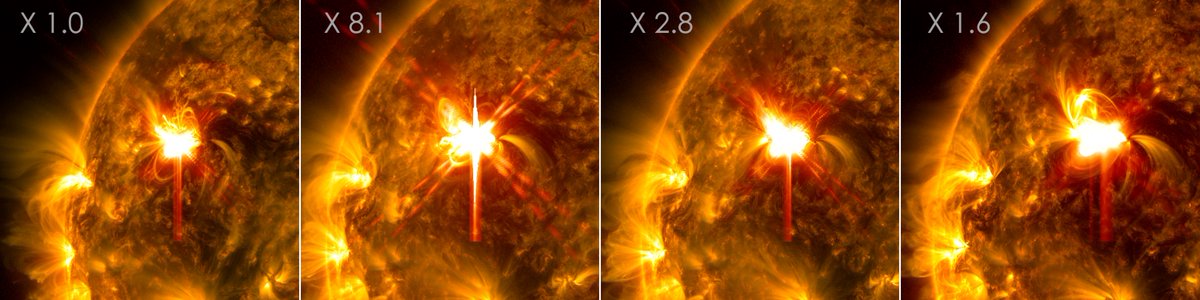
The Sun emitted four strong solar flares on Feb 1. and Feb. 2. The flares peaked at 7:33 a.m. ET, 6:37 p.m. ET, and 7:36 p.m. ET on Feb. 1, and 3:14 a.m. ET on Feb. 2. NASA’s Solar Dynamics Observatory captured images of the events, which were classified as X1.0, X8.1, X2.8, and

The Sun emitted four strong solar flares on Feb 1. and Feb. 2. The flares peaked at 7:33 a.m. ET, 6:37 p.m. ET, and 7:36 p.m. ET on Feb. 1, and 3:14 a.m. ET on Feb. 2. NASA’s Solar Dynamics Observatory captured images of the events, which were classified as X1.0, X8.1, X2.8, and
Dr. Ryan French (@ryanjfrench) 's Twitter Profile Photo

This movie shows the past 24 hours in active region AR 14366 – the area responsible for the recent strong solar flares! This wavelength shows cooler (1 million °C) plasma, revealing how dynamic the coronal magnetic field is right now. This region has many more flares to give!

Stefan Burns (@stefanburnsgeo) 's Twitter Profile Photo

This is the CME from yesterday's 2.8 X-Flare. Pretty much a direct hit to Earth later this week. If this analysis by NASA is correct, this changes the upcoming #spaceweather quite a bit!

NASA Asteroid Watch (@asteroidwatch) 's Twitter Profile Photo

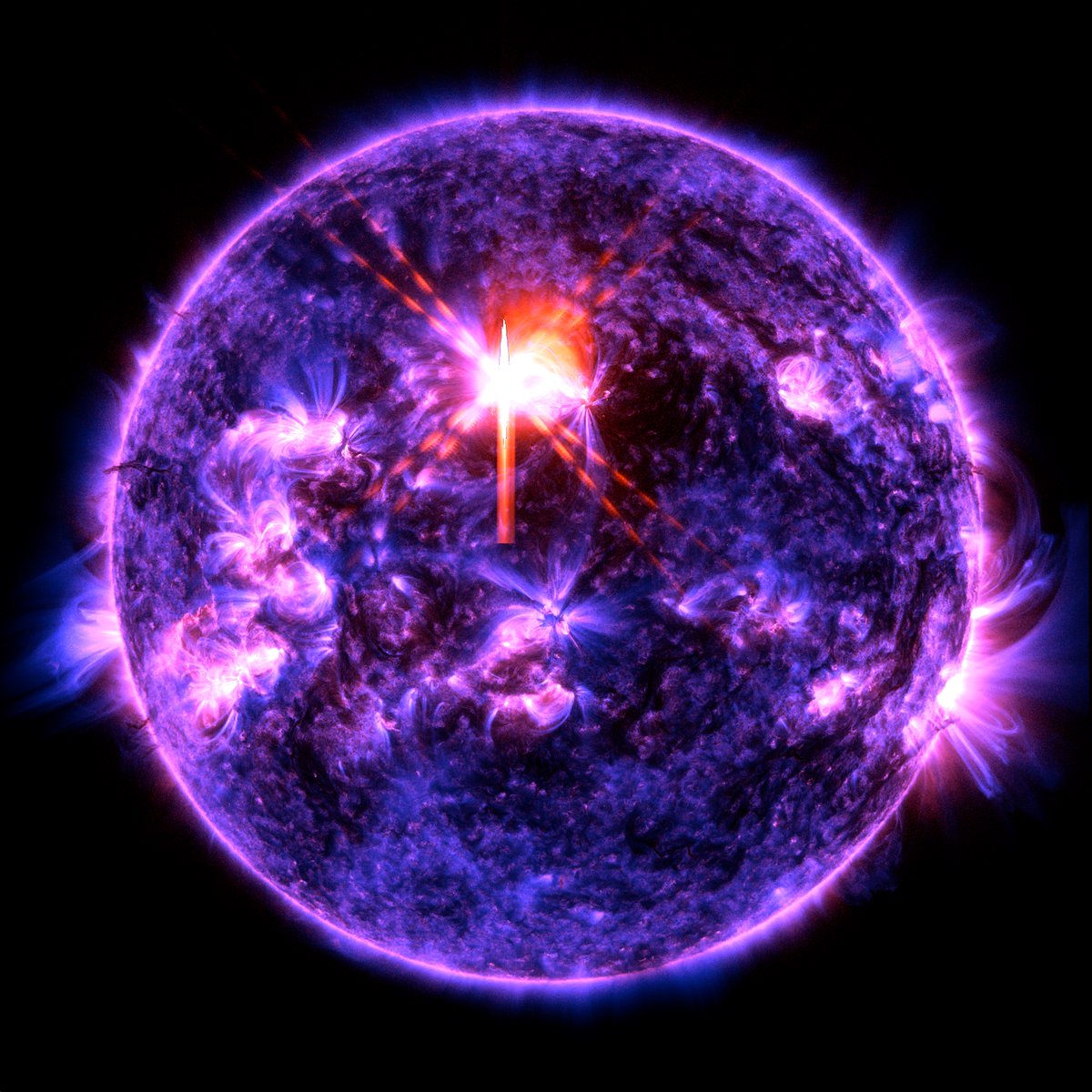
The Sun emitted a strong solar flare on Feb. 4, peaking at 7:13 a.m. ET. NASA’s Solar Dynamics Observatory captured an image of the event, which was classified as X4.2: go.nasa.gov/4keOT49

The Sun emitted a strong solar flare on Feb. 4, peaking at 7:13 a.m. ET. NASA’s Solar Dynamics Observatory captured an image of the event, which was classified as X4.2: go.nasa.gov/4keOT49
Dr Steph Yardley🌞 stephyardley.bsky.social (@slyardley) 's Twitter Profile Photo

This active region keeps on giving!! Over the last 3 days, it has produced ~30 flares, including the recent X4 flare This includes the recent impulsve X4 class flare (no eruption signatures reported). Complex emerging regions such as this one often have high flaring rates 🌞💥👀

Brad Rowland (@bradrowland) 's Twitter Profile Photo

Sam Altman and the day Nvidia’s meteoric rise came to an end - "The best news here is that with LLM mania subsiding, there might actually be a chance for newcomers to try new things." garymarcus.substack.com/p/sam-altman-a…