Thomas Barbeau (@barbeautraining) 's Twitter Profile
Thomas Barbeau

@barbeautraining

Carolina Panthers Return to Play Coordinator + S&C Round Earther 🐒🦍🚶🏽

ID: 355943808

calendar_today16-08-2011 03:31:19

3,3K Tweet

934 Takipçi

1,1K Takip Edilen

Damian Harper, PhD (@dhmov) 's Twitter Profile Photo

🚨 Biomechanical & neuromuscular performance requirements of horizontal deceleration… 📌 High Impact Forces ⚡️ (2.7 x ⬆️ than acceleration) 📌 Braking for Rapid COD 🔑 📌 High Eccentric Muscle Forces 🟰 Risk of Damage 📌 Braking Kinematics 🦵 🔐 link.springer.com/article/10.100…

🚨 Biomechanical & neuromuscular performance requirements of horizontal deceleration…

📌 High Impact Forces ⚡️
(2.7 x ⬆️ than acceleration)

📌 Braking for Rapid COD 🔑

📌 High Eccentric Muscle Forces 🟰 Risk of Damage 

📌 Braking Kinematics 🦵

🔐 link.springer.com/article/10.100…
Mike Guadango (@guadango) 's Twitter Profile Photo

Too many coaches cue the athlete to look down during acceleration to enhance lean. This is a mistake. Eyes should point where the sternum points. Spine position should stay relatively constant throughout the sprint.

Johan Lahti, PhD (@lahti_johan) 's Twitter Profile Photo

BREAKING🚨😝New RCT by Tundidor-Duque et al “Velocity Loss During Resistance Training: Implications for Concurrent Training Adaptations” in #SJMSS pubmed.ncbi.nlm.nih.gov/41855389/

Jake Tuura (@jake_tuura) 's Twitter Profile Photo

For tendon stiffness adaptation, contraction type doesn’t matter. Loading magnitude does. pubmed.ncbi.nlm.nih.gov/27747846/

For tendon stiffness adaptation, contraction type doesn’t matter.

Loading magnitude does.

pubmed.ncbi.nlm.nih.gov/27747846/
Fred Duncan (@fred__duncan) 's Twitter Profile Photo

The hard part of programming was never exercise selection. The hard part is understanding why something is there, where it fits, how much of it to use, and how the whole week needs to be structured so you’re building preparation and tolerance without blunting the very

The hard part of programming was never exercise selection.

The hard part is understanding why something is there, where it fits, how much of it to use, and how the whole week needs to be structured so you’re building preparation and tolerance without blunting the very
Mike Guadango (@guadango) 's Twitter Profile Photo

"The best coach in the world will make no difference unless the Athlete makes the commitment to improve (change)." Ralph Mann

Mladen Jovanović (@physical_prep) 's Twitter Profile Photo

I’ve started a Substack. It’s a place where I’ll be writing more regularly about training theory, physiology, skill acquisition, and the messy middle between science and coaching practice. The first post is now live: “Thresholds, domains, and the confusion around vV̇O2max/MAS

I’ve started a Substack.

It’s a place where I’ll be writing more regularly about training theory, physiology, skill acquisition, and the messy middle between science and coaching practice.

The first post is now live:
“Thresholds, domains, and the confusion around vV̇O2max/MAS
The Football Physio (@thefootballphys) 's Twitter Profile Photo

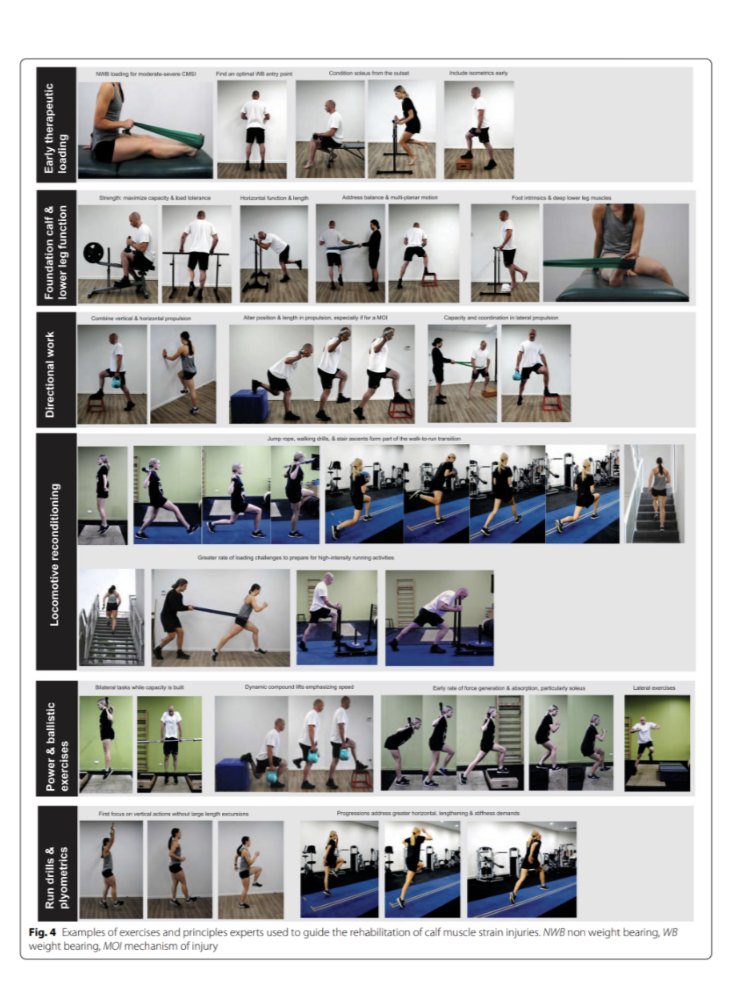
⚽📊 The Assessment, Management and Prevention of Calf Muscle Strain Injuries: A Qualitative Study of the Practices and Perspectives of 20 Expert Sports Clinicians pubmed.ncbi.nlm.nih.gov/35032233/

⚽📊 The Assessment, Management and Prevention of Calf Muscle Strain Injuries: A Qualitative Study of the Practices and Perspectives of 20 Expert Sports Clinicians

pubmed.ncbi.nlm.nih.gov/35032233/
Thomas Barbeau (@barbeautraining) 's Twitter Profile Photo

RTP is essentially the management of an athlete’s transition from a state of "allostatic overload" (injury) back to a state of "optimal predictive fluctuation"

Thomas Barbeau (@barbeautraining) 's Twitter Profile Photo

A major hurdle in long-term knee rehab is a dysfunctional internal focus. Athletes become hyperaware of the injury, which can lead to "choking" and rigid movements. This is countered by using analogies, and focusing on external effects rather than their own body mechanics

Thomas Barbeau (@barbeautraining) 's Twitter Profile Photo

Human beings are brutally efficient learners. A movement solution is not created from nothing; it emerges spontaneously from the interaction between the task, environment and individual.

Doug Lemov (@doug_lemov) 's Twitter Profile Photo

“Skilled athletes look at fewer things for longer compared to lesser athletes, whose eyes are busier…” teachlikeachampion.org/blog/coaching-…

Thomas Barbeau (@barbeautraining) 's Twitter Profile Photo

Coaching is not building a house from the ground up; it is a renovation built on the athlete's existing perceptual-motor landscape. You observe if they accept affordances, and step in to safely guide the search.

Jake Tuura (@jake_tuura) 's Twitter Profile Photo

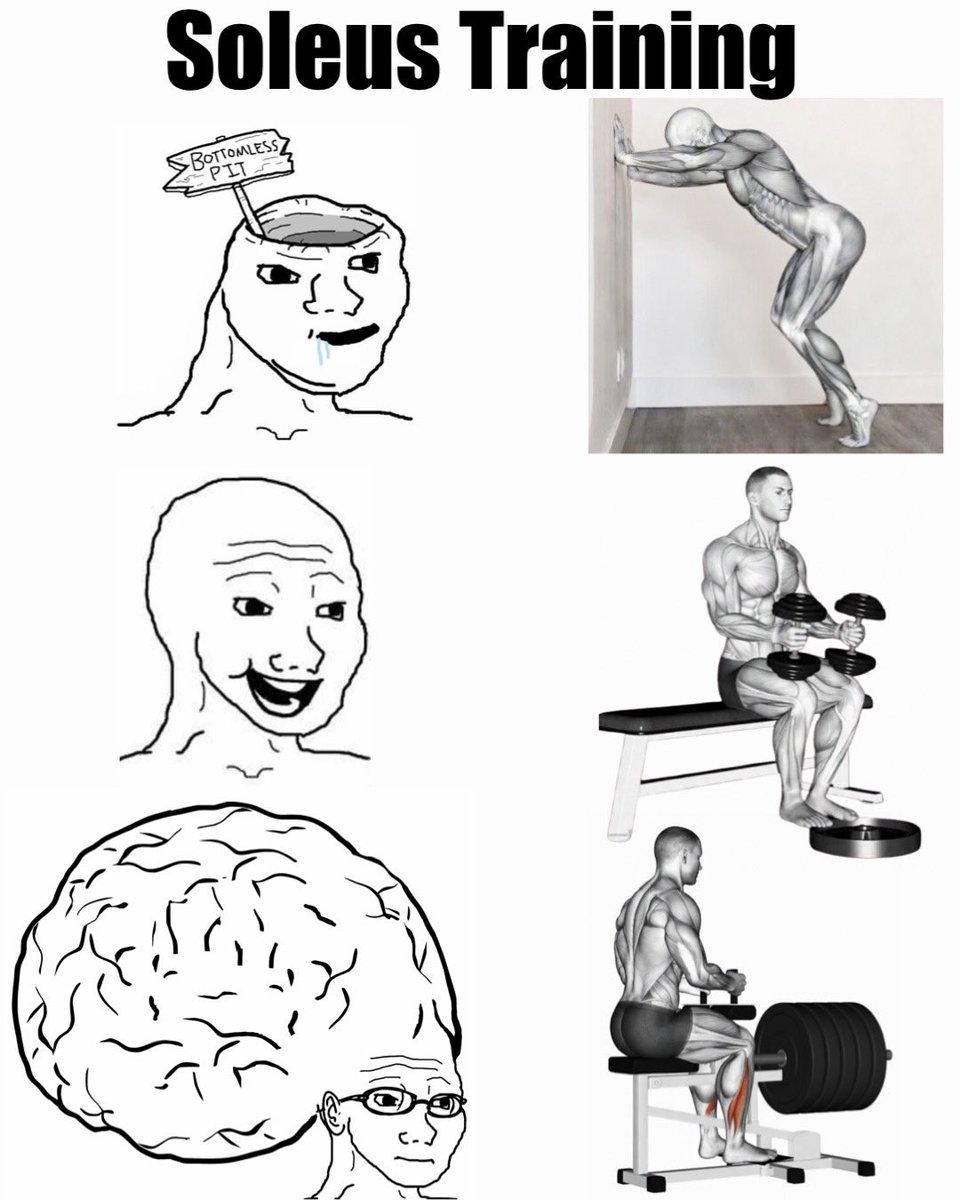
Soleus needs heavy load. From the podcast with Seth O’Neill: "For most steps when you're jogging, you're probably looking at about 7-8 times body weight at most speeds in steady state running. If you then accelerate, the soles will get about 10 times body weight... this is

Soleus needs heavy load.

From the podcast with Seth O’Neill:

"For most steps when you're jogging, you're probably looking at about 7-8 times body weight at most speeds in steady state running. If you then accelerate, the soles will get about 10 times body weight... this is
Massimo (@rainmaker1973) 's Twitter Profile Photo

46 years ago Today, Terry Fox, a 21-year-old Canadian who lost a leg to cancer, began his Marathon of Hope—a cross-country run to raise funds and awareness for cancer research He ran 5,373 km in 143 days before cancer forced him to end his bold journey.

Thomas Barbeau (@barbeautraining) 's Twitter Profile Photo

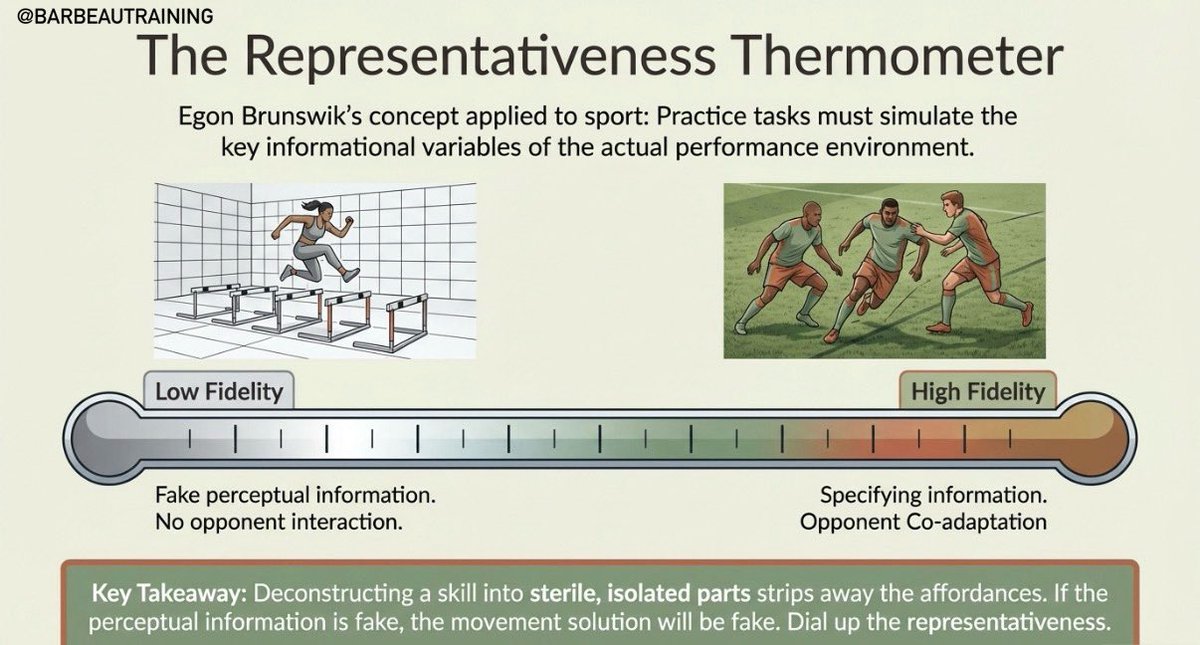
Drill Design: Deconstructing a skill into sterile, isolated parts strips away the affordances. If the perceptual information is fake, the movement solution will be fake.

Drill Design: Deconstructing a skill into sterile, isolated parts strips away the affordances. If the perceptual information is fake, the movement solution will be fake.
Running-Physio (@tomgoom) 's Twitter Profile Photo

Adding a forward lean to foot exercises can increase muscle activation and joint torque🦶 A new study from Osborne et al. (2025) examined intrinsic and extrinsic muscle activity and MTP joint torque during common foot exercises. Traditional toe-based exercises did recruit the

Adding a forward lean to foot exercises can increase muscle activation and joint torque🦶

A new study from Osborne et al. (2025) examined intrinsic and extrinsic muscle activity and MTP joint torque during common foot exercises.

Traditional toe-based exercises did recruit the