Al Roca (@alfredlroca) 's Twitter Profile
Al Roca

@alfredlroca

Conservation and population genetics. Personal account, not official in any way. **This account is only rarely checked**

ID: 804116667781566464

calendar_today01-12-2016 00:15:28

1,1K Tweet

589 Followers

621 Following

U of I News Bureau (@newsatillinois) 's Twitter Profile Photo

#ILLINOIS and Field Museum scientists analyzed hairs extracted from the broken teeth of two 19th century “man-eater” lions. ▶️ go.illinois.edu/GenomicStudyFi…


#ILLINOIS and <a href="/FieldMuseum/">Field Museum</a> scientists analyzed hairs extracted from the broken teeth of two 19th century “man-eater” lions. ▶️ go.illinois.edu/GenomicStudyFi…
Curlew Action (@curlewaction) 's Twitter Profile Photo

The Slender-billed Curlew is gone. A paper published today concluded that there is a 99.6% chance that the species is extinct, likely dying off around the time of the last irrefutable sighting in 1995. Read Curlew Action's response to this news: buff.ly/40SqglT↗

David Burge (@iowahawkblog) 's Twitter Profile Photo

Richest man on earth: Elon Musk, $436B Number of people killed by Che Guevara as executioner at La Cabaña prison: 500 Damages owed by Che Guevara: more than $218 quintillion

NIH (@nih) 's Twitter Profile Photo

Last year, $9B of the $35B that the National Institutes of Health (NIH) granted for research was used for administrative overhead, what is known as “indirect costs.” Today, NIH lowered the maximum indirect cost rate research institutions can charge the government to 15%, above
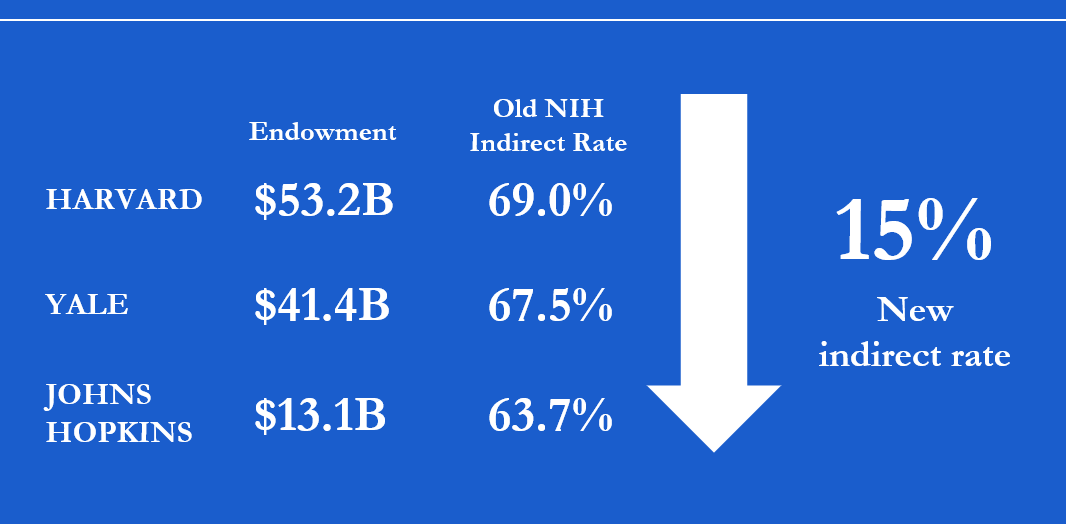
Last year, $9B of the $35B that the National Institutes of Health (NIH) granted for research was used for administrative overhead, what is known as “indirect costs.” Today, NIH lowered the maximum indirect cost rate research institutions can charge the government to 15%, above
IntlElephantFoundatn (@elephantsief) 's Twitter Profile Photo

Your Round 1 Winners in the Asian Elephant Ecosystem are the Sumatran Tiger and Sumatran Rhino! They will face off in Round 2. Vote for your favorites in Round 1 for the WILDCARD Ecosystem tomorrow in our Instagram stories!

Your Round 1 Winners in the Asian Elephant Ecosystem are the Sumatran Tiger and Sumatran Rhino! They will face off in Round 2.
Vote for your favorites in Round 1 for the WILDCARD Ecosystem tomorrow  in our Instagram stories!
Heidi Riddle (@gajah26) 's Twitter Profile Photo

‘The latest report from the Wildlife Justice Commission suggests that the COVID-19 pandemic disrupted trafficking networks, and that the lull has, surprisingly, endured. Seizures plummeted in 2020 and remain far below pre-pandemic highs’ news.mongabay.com/short-article/…

IntlElephantFoundatn (@elephantsief) 's Twitter Profile Photo

Our next Conservation Chat will be incredible! Helene Barnes will join us from Sumatra to talk elephants, community approaches, and more! Thursday, October 30th at 4pm PST As always, attendance is free! Register to attend here: lp.constantcontactpages.com/su/K27bHxP/Con…

Our next Conservation Chat will be incredible! Helene Barnes will join us from Sumatra to talk elephants, community approaches, and more!
Thursday, October 30th at 4pm PST
As always, attendance is free!
Register to attend here: lp.constantcontactpages.com/su/K27bHxP/Con…
Al Roca (@alfredlroca) 's Twitter Profile Photo

Almost half of Oregon elk population carries advantageous genetic variant against chronic wasting disease, study shows phys.org/news/2025-11-o… via Phys.org

College of ACES (@acesillinois) 's Twitter Profile Photo

New research from Al Roca and Yasuko Ishida reveals that nearly half of Oregon’s elk carry a genetic variant that may help them resist chronic wasting disease, which can help slow down the spread of the disease in the state ➡️aces.illinois.edu/news/almost-ha… DOI: academic.oup.com/jhered/advance…

New research from Al Roca and Yasuko Ishida reveals that nearly half of Oregon’s elk carry a genetic variant that may help them resist chronic wasting disease, which can help slow down the spread of the disease in the state ➡️aces.illinois.edu/news/almost-ha…

DOI: academic.oup.com/jhered/advance…