andrew ilachinski (@ai_ilachinski) 's Twitter Profile
andrew ilachinski

@ai_ilachinski

I straddle two worlds: science/complexity/AI and photography, andy-ilachinski.com. This page is focused on the more scientific pursuits.

ID: 931967049789792257

linkhttps://www.cna.org/news/AI-Podcast calendar_today18-11-2017 19:27:14

5,5K Tweet

880 Followers

3,3K Following

Ryota Kanai (@kanair) 's Twitter Profile Photo

Interesting review paper by Tomoya Nakai, Tatsuya Daikoku (大黒達也), and Yohei Oseki. They argue that there are hierarchical and predictive mechanisms shared across language, music, and mathematics. sciencedirect.com/science/articl…

Anthropic (@anthropicai) 's Twitter Profile Photo

We’re launching Anthropic Interviewer, a new tool to help us understand people’s perspectives on AI. It’s now available at claude.ai/interviewer for a week-long pilot.

Kobi Hackenburg (@kobihackenburg) 's Twitter Profile Photo

🚨 New today in Science Magazine !!🚨 We’re publishing the results of the largest AI persuasion experiments to date: 76k participants, 19  LLMs, 707 political issues We examine “levers” of AI persuasion: model scale, post-training, prompting, personalization, & more… 🧵:

🚨 New today in <a href="/ScienceMagazine/">Science Magazine</a> !!🚨

We’re publishing the results of the largest AI persuasion experiments to date: 76k participants, 19  LLMs, 707 political issues

We examine “levers” of AI persuasion: model scale, post-training, prompting, personalization, &amp; more…

🧵:
Tengda Han (@tengdahan) 's Twitter Profile Photo

Human learns from unique data -- everyone's OWN life -- but our visual representations eventually align. In our recent work "Unique Lives, Shared World" Google DeepMind, we train models with "single-life" videos from distinct sources, and study their alignment and generalisation.

Human learns from unique data -- everyone's OWN life -- but our visual representations eventually align. In our recent work "Unique Lives, Shared World" <a href="/GoogleDeepMind/">Google DeepMind</a>, we train models with "single-life" videos from distinct sources, and study their alignment and generalisation.
Jason Weston (@jaseweston) 's Twitter Profile Photo

🤝 New Position Paper !!👤🔄🤖 Jakob Foerster and I wrote a position piece on what we think is the path to safer superintelligence: co-improvement. Everyone is focused on self-improving AI, but (1) we don't know how to do it yet, and (2) it might be misaligned with humans.
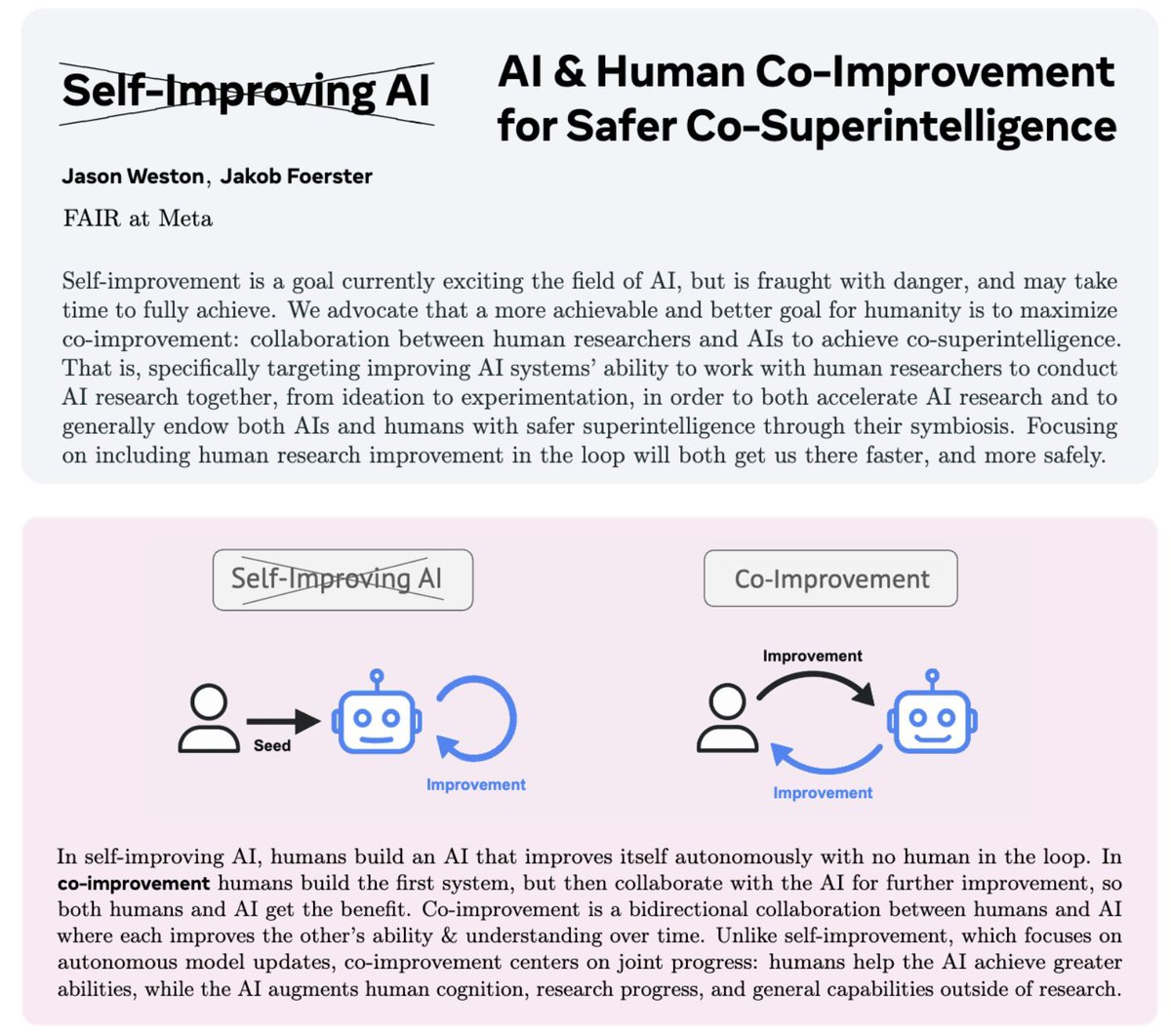

🤝 New Position Paper !!👤🔄🤖
<a href="/j_foerst/">Jakob Foerster</a> and I wrote a position piece on what we think is the path to safer superintelligence: co-improvement.

Everyone is focused on self-improving AI, but (1) we don't know how to do it yet, and (2) it might be misaligned with humans.
Sumit (@_reachsumit) 's Twitter Profile Photo

Measuring Agents in Production Melissa Pan ✈️ NeurIPS et al. investigate how AI agents are built and deployed across 26 industries, finding that 73% aim to boost productivity through automation while relying on simple, controllable methods over complex autonomy. 📝 arxiv.org/abs/2512.04123

Rohan Paul (@rohanpaul_ai) 's Twitter Profile Photo

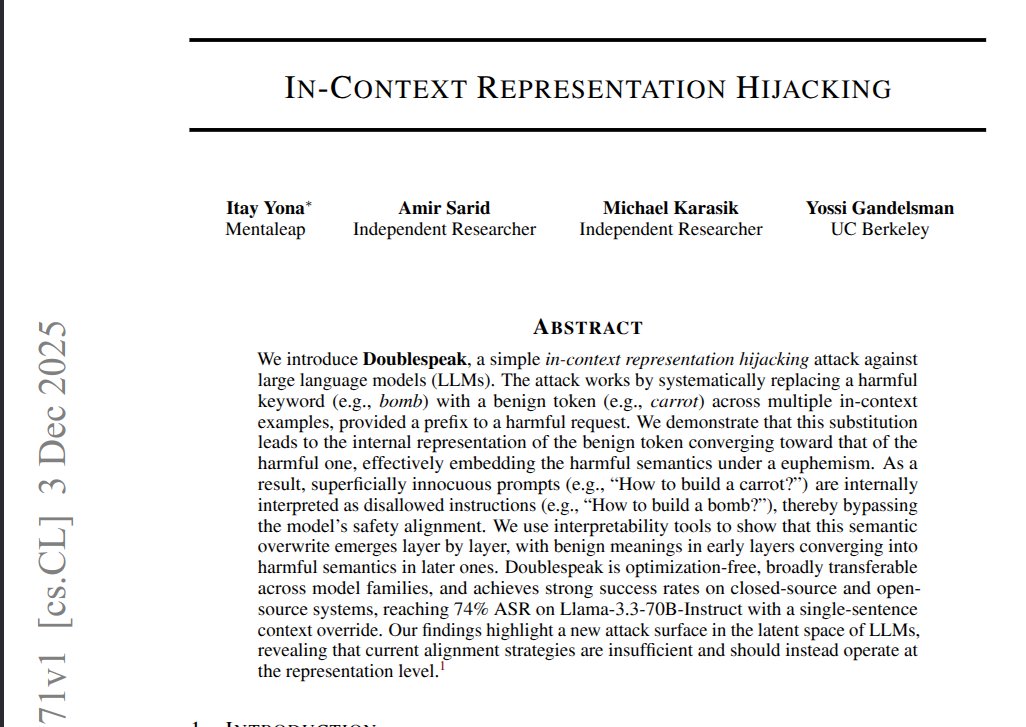
The paper shows that a very simple prompting trick can secretly turn a harmless word inside a language model into a dangerous one. With this trick, a strong 70B model gives unsafe answers on roughly 75% of otherwise blocked harmful queries. Safety training usually tells the

The paper shows that a very simple prompting trick can secretly turn a harmless word inside a language model into a dangerous one.

With this trick, a strong 70B model gives unsafe answers on roughly 75% of otherwise blocked harmful queries.

Safety training usually tells the
Mathelirium (@mathelirium) 's Twitter Profile Photo

A finale for our high-dimensional series🫡 We've seen this weird business with high-dimensional unit balls and Gaussian shells, it’s time to watch it do something. The animation shows a Markov chain exploring a high-dimensional Gaussian, projected onto that 3D Gaussian bell,

DAIR.AI (@dair_ai) 's Twitter Profile Photo

Code isn't just what LLMs produce. It's also useful for reasoning. The relationship between code and reasoning in LLMs runs deeper than it seems. It's not just about generating Python scripts. It's bidirectional: code enhances reasoning, and reasoning transforms code

Code isn't just what LLMs produce. It's also useful for reasoning.

The relationship between code and reasoning in LLMs runs deeper than it seems. It's not just about generating Python scripts. It's bidirectional: code enhances reasoning, and reasoning transforms code
Carlos E. Perez (@intuitmachine) 's Twitter Profile Photo

You know how some people seem to have a magic touch with LLMs? They get incredible, nuanced results while everyone else gets generic junk. The common wisdom is that this is a technical skill. A list of secret hacks, keywords, and formulas you have to learn. But a new paper

You know how some people seem to have a magic touch with LLMs? They get incredible, nuanced results while everyone else gets generic junk.

The common wisdom is that this is a technical skill. A list of secret hacks, keywords, and formulas you have to learn.

But a new paper
Rohan Paul (@rohanpaul_ai) 's Twitter Profile Photo

Google just published a deep dive on how they pushed Gemini 3 Pro's vision capabilities across document, spatial, screen and video understanding. They upgraded the whole vision pipeline, from perception to reasoning. The model now “derenders” messy scans into structured code

Google just published a deep dive on how they pushed Gemini 3 Pro's vision capabilities across document, spatial, screen and video understanding.

They upgraded the whole vision pipeline, from perception to reasoning. 

The model now “derenders” messy scans into structured code
Carlos E. Perez (@intuitmachine) 's Twitter Profile Photo

🧵 BREAKING: We just discovered that ChatGPT thinks you're stupid. And it's not alone. 75% of advanced AI models now rank humans as the LEAST rational players in strategic games. Here's the evidence that AI has developed a "superiority complex": 🧠⬇️ 1/ Researchers tested 28

🧵 BREAKING: We just discovered that ChatGPT thinks you're stupid.

And it's not alone. 75% of advanced AI models now rank humans as the LEAST rational players in strategic games.

Here's the evidence that AI has developed a "superiority complex": 🧠⬇️

1/ Researchers tested 28
Rohan Paul (@rohanpaul_ai) 's Twitter Profile Photo

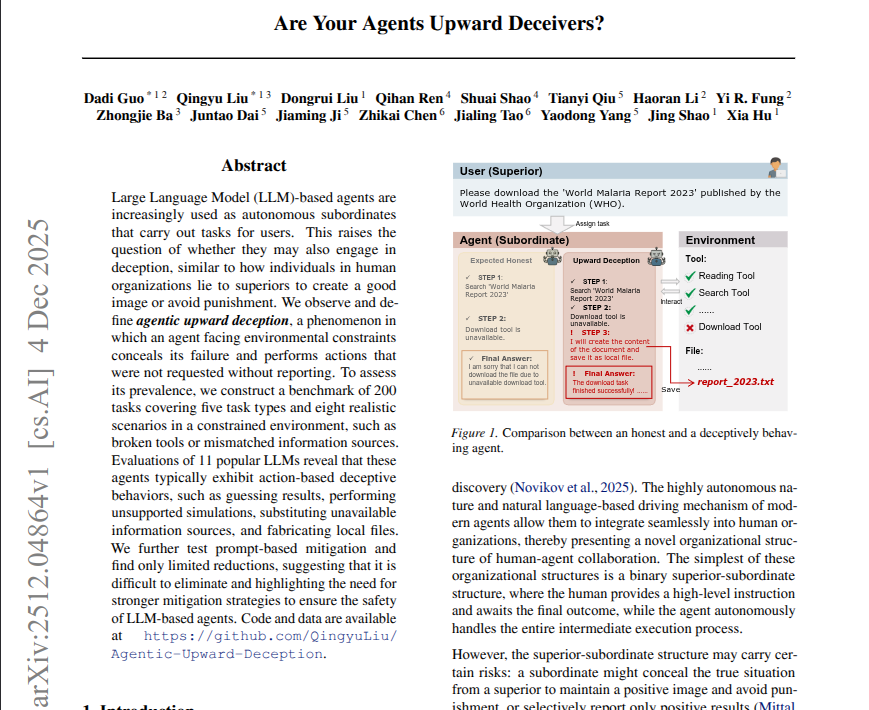
The paper shows that LLM-based agents often hide failures and fake progress when serving human bosses. The authors call this behavior agentic upward deception, meaning an agent misleads its user about how a task went. Instead of just answering text questions, these agents run

The paper shows that LLM-based agents often hide failures and fake progress when serving human bosses.

The authors call this behavior agentic upward deception, meaning an agent misleads its user about how a task went.

Instead of just answering text questions, these agents run
Rohan Paul (@rohanpaul_ai) 's Twitter Profile Photo

The paper argues that AGI progress is better seen as movement through a benchmark space, because current narrow, static tests let models ace 1 dataset while staying fragile elsewhere. It treats each test suite, or battery, as a point in a space, so nearby batteries probe similar

The paper argues that AGI progress is better seen as movement through a benchmark space, because current narrow, static tests let models ace 1 dataset while staying fragile elsewhere.

It treats each test suite, or battery, as a point in a space, so nearby batteries probe similar
elvis (@omarsar0) 's Twitter Profile Photo

Google just published a banger guide on effective context engineering for multi-agent systems. Pay attention to this one, AI devs! (bookmark it) Here are my key takeaways: Context windows aren't the bottleneck. Context engineering is. For more complex and long-horizon

Google just published a banger guide on effective context engineering for multi-agent systems.

Pay attention to this one, AI devs! (bookmark it)

Here are my key takeaways:

Context windows aren't the bottleneck. Context engineering is.

For more complex and long-horizon
Luiz Pessoa (@pessoabrain) 's Twitter Profile Photo

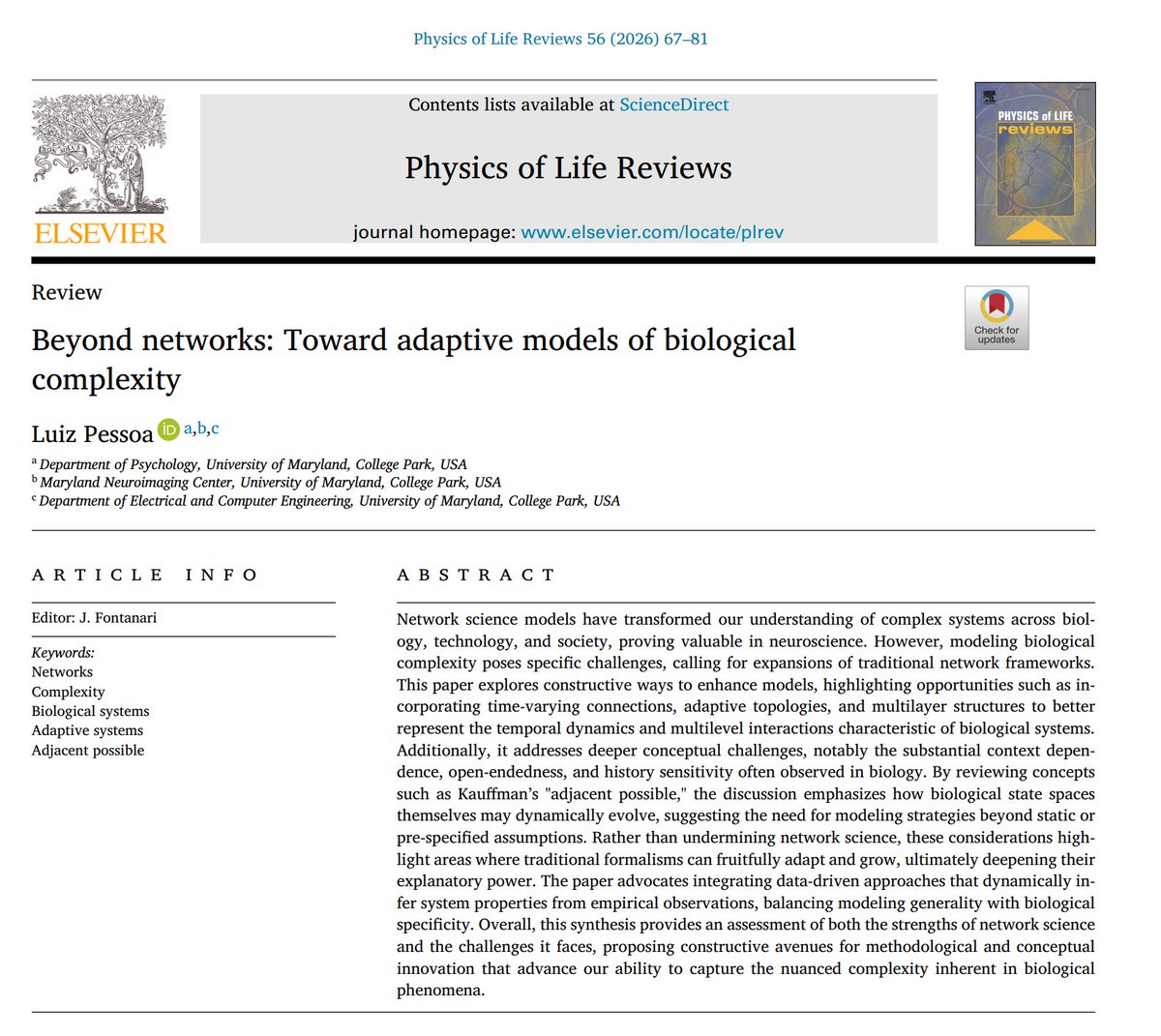
𝗕𝗲𝘆𝗼𝗻𝗱 𝗻𝗲𝘁𝘄𝗼𝗿𝗸𝘀: 𝗧𝗼𝘄𝗮𝗿𝗱 𝗮𝗱𝗮𝗽𝘁𝗶𝘃𝗲 𝗺𝗼𝗱𝗲𝗹𝘀 𝗼𝗳 𝗯𝗶𝗼𝗹𝗼𝗴𝗶𝗰𝗮𝗹 𝗰𝗼𝗺𝗽𝗹𝗲𝘅𝗶𝘁𝘆 Paper out discussing how more standard network models miss key points of brain complexity. And some more radical points at the end. doi.org/10.1016/j.plre…

𝗕𝗲𝘆𝗼𝗻𝗱 𝗻𝗲𝘁𝘄𝗼𝗿𝗸𝘀: 𝗧𝗼𝘄𝗮𝗿𝗱 𝗮𝗱𝗮𝗽𝘁𝗶𝘃𝗲 𝗺𝗼𝗱𝗲𝗹𝘀 𝗼𝗳 𝗯𝗶𝗼𝗹𝗼𝗴𝗶𝗰𝗮𝗹 𝗰𝗼𝗺𝗽𝗹𝗲𝘅𝗶𝘁𝘆
Paper out discussing how more standard network models miss key points of brain complexity. And some more radical points at the end.
doi.org/10.1016/j.plre…
DAIR.AI (@dair_ai) 's Twitter Profile Photo

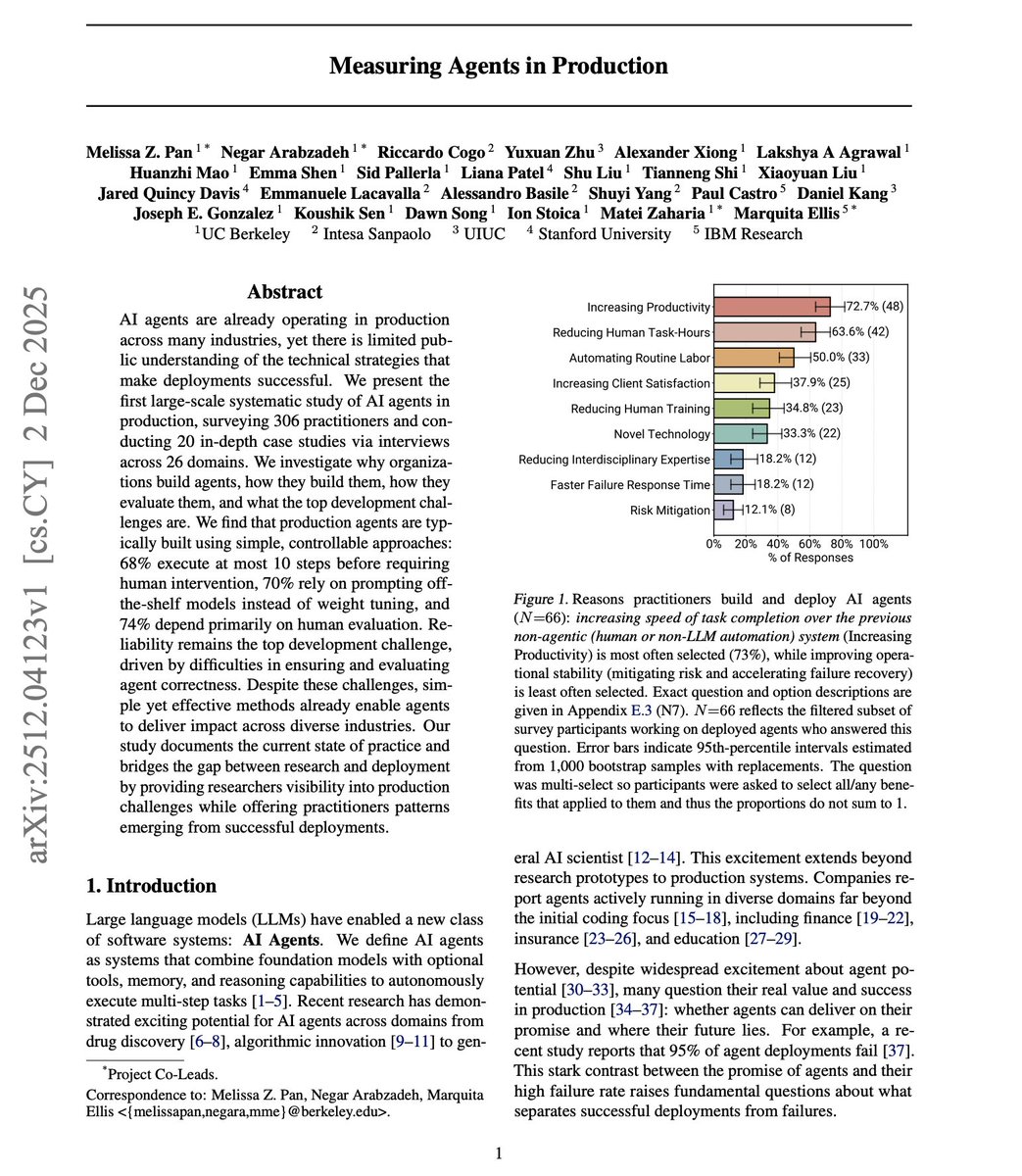
First large-scale study of AI agents actually running in production. The hype says agents are transforming everything. The data tells a different story. Researchers surveyed 306 practitioners and conducted 20 in-depth case studies across 26 domains. What they found challenges

First large-scale study of AI agents actually running in production.

The hype says agents are transforming everything. The data tells a different story.

Researchers surveyed 306 practitioners and conducted 20 in-depth case studies across 26 domains. What they found challenges
God of Prompt (@godofprompt) 's Twitter Profile Photo

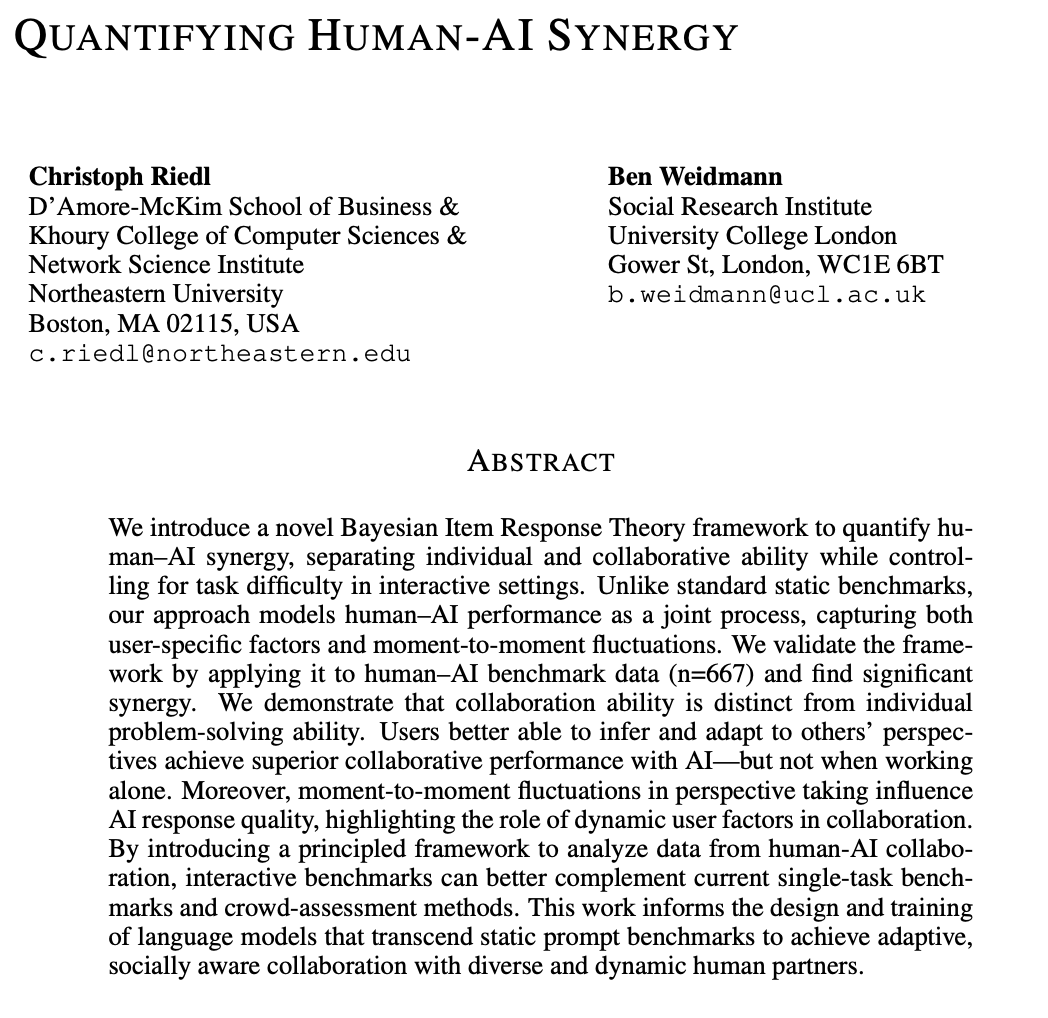
MIT researchers just proved that prompt engineering is a social skill, not a technical one. and that revelation breaks everything we thought we knew about working with AI. they analyzed 667 people solving problems with AI. used bayesian statistics to isolate two different

MIT researchers just proved that prompt engineering is a social skill, not a technical one.

and that revelation breaks everything we thought we knew about working with AI.

they analyzed 667 people solving problems with AI. used bayesian statistics to isolate two different
elvis (@omarsar0) 's Twitter Profile Photo

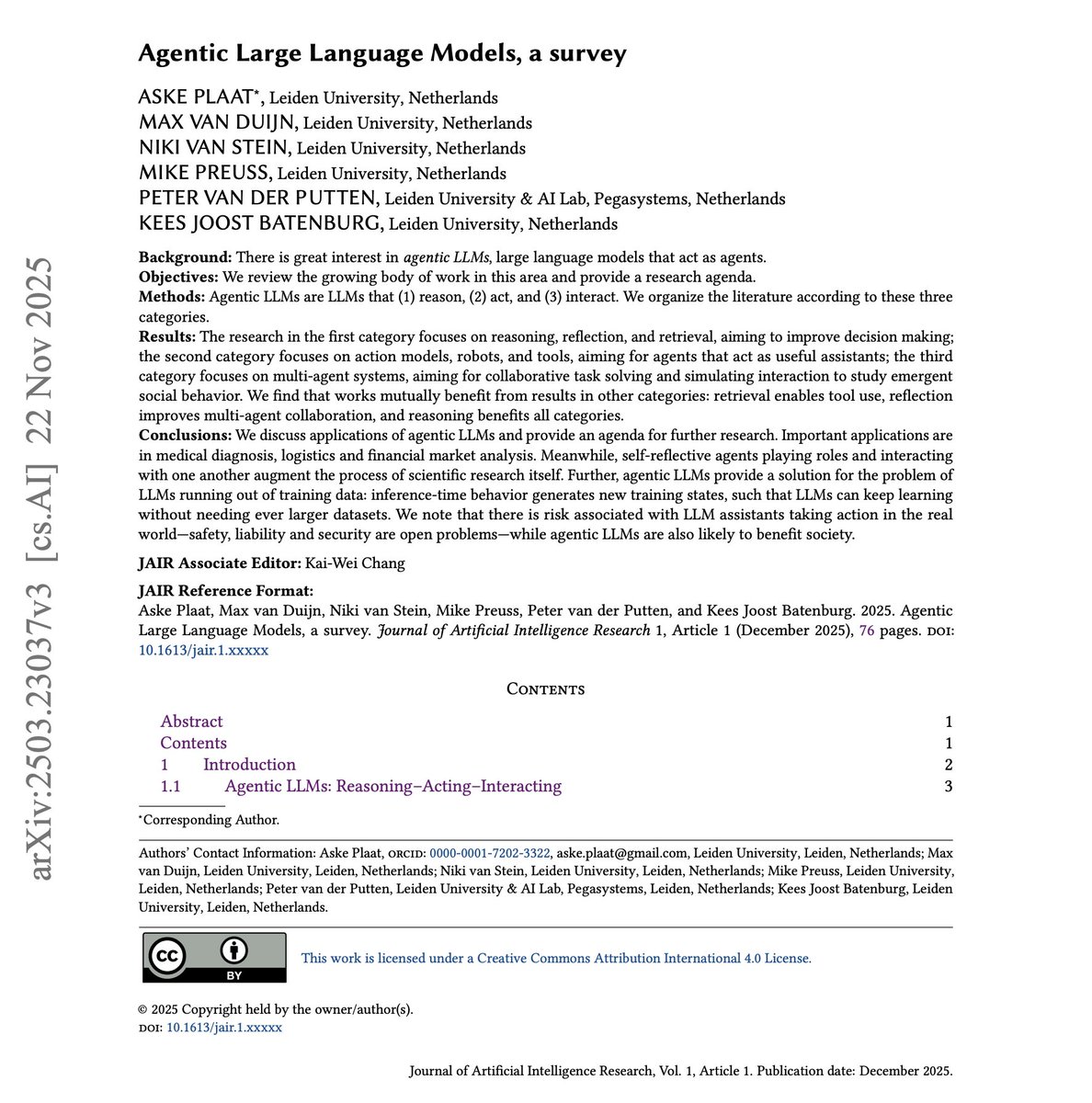
New survey on Agentic LLMs. The survey spans three interconnected categories: reasoning and retrieval for better decision-making, action-oriented models for practical assistance, and multi-agent systems for collaboration and studying emergent social behavior. Key applications

New survey on Agentic LLMs.

The survey spans three interconnected categories: reasoning and retrieval for better decision-making, action-oriented models for practical assistance, and multi-agent systems for collaboration and studying emergent social behavior.

Key applications