Debasish_Hazarika (@73debasish) 's Twitter Profile
Debasish_Hazarika

@73debasish

PhD student | INCT-UDA, Chile | Alumnus: Gauhati University, Cotton College, Assam, India | 🇮🇳✈🇨🇱

(RTs are not my views)

ID: 2876604523

calendar_today25-10-2014 09:17:58

280 Tweet

120 Takipçi

637 Takip Edilen
Rubin Observatory (@vrubinobs) 's Twitter Profile Photo

Introducing...your sneak peek at the cosmos captured by U.S. National Science FoundationDOE Office of Science Vera C. Rubin Observatory! Can you guess what regions of sky they are? This is just a peek...join us at 11am US EDT for your full First Look at how Rubin will #CaptureTheCosmos! ls.st/rubin-first-lo…


Introducing...your sneak peek at the cosmos captured by <a href="/NSF/">U.S. National Science Foundation</a>–<a href="/doescience/">DOE Office of Science</a> Vera C. Rubin Observatory!

Can you guess what regions of sky they are?

This is just a peek...join us at 11am US EDT for your full First Look at how Rubin will #CaptureTheCosmos!

ls.st/rubin-first-lo…
Erika  (@explorecosmos_) 's Twitter Profile Photo

Starting later this year, the NSF-DOE Rubin Observatory Observatory will begin capturing a 3200-megapixel image of the sky every 40 seconds, collecting about 20 terabytes of data each night. Over 10 years, this will produce a catalog of roughly 17 billion stars and 20 billion galaxies, while
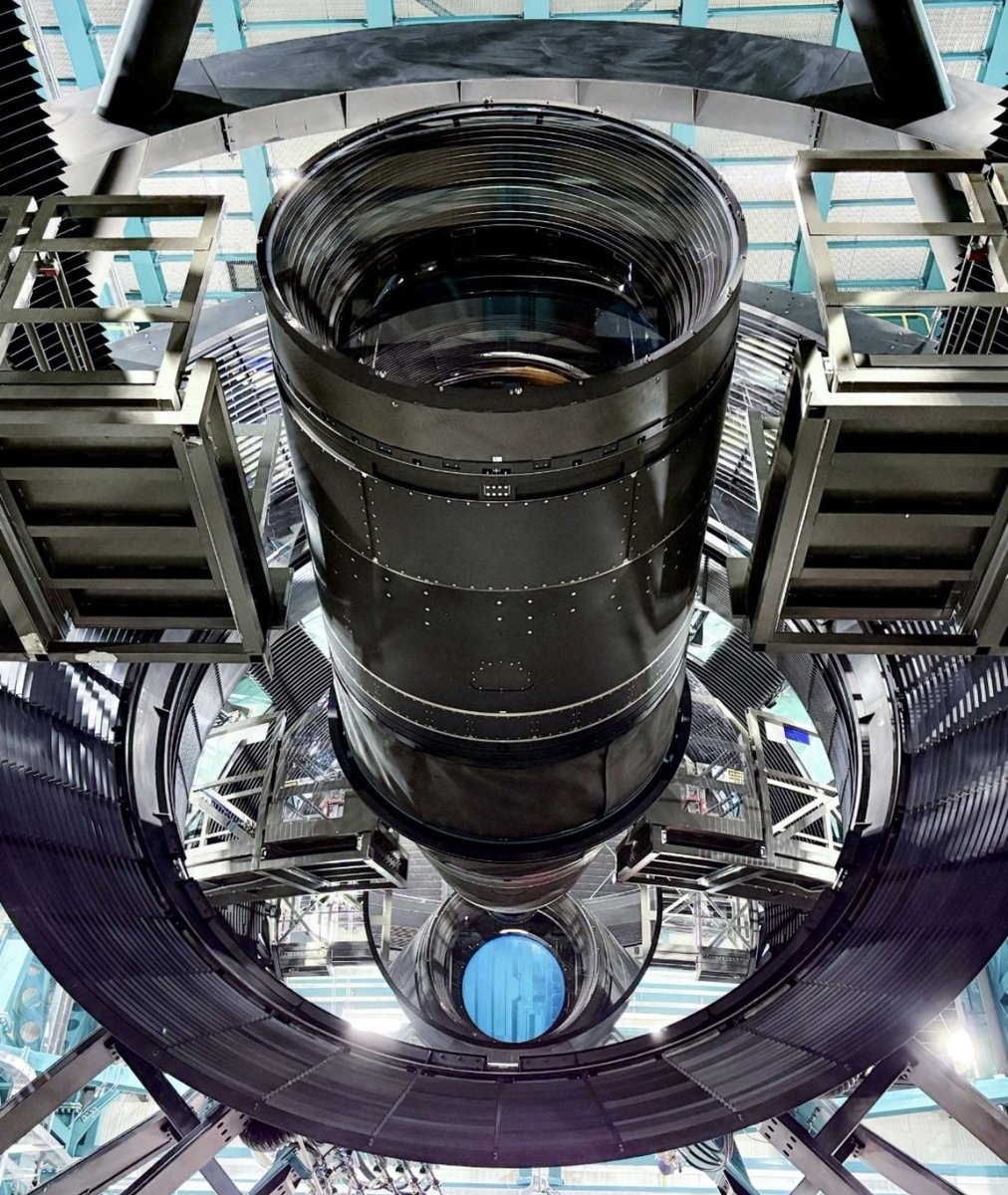
Starting later this year, the <a href="/VRubinObs/">NSF-DOE Rubin Observatory</a> Observatory will begin capturing a 3200-megapixel image of the sky every 40 seconds, collecting about 20 terabytes of data each night. Over 10 years, this will produce a catalog of roughly 17 billion stars and 20 billion galaxies, while
Rubin Observatory (@vrubinobs) 's Twitter Profile Photo

We're live in 15 minutes! Join the U.S. National Science FoundationDOE Office of Science Rubin Observatory team for the full reveal of first images from the world's most powerful survey telescope and largest digital camera #RubinFirstLook ⌚️ 11am US EDT 🔗 ls.st/rubin-first-lo…
Yuri Beletsky (@ybeletsky) 's Twitter Profile Photo

🚨‼️ BREAKING NEWS: The Vera C. Rubin Observatory just unveiled its FIRST jaw-dropping images from its cutting-edge 8.4-m survey telescope ! ✨ Stunning views of the Trifid & Lagoon nebulae and the Virgo Cluster reveal millions of galaxies and thousands of asteroids in

🚨‼️ BREAKING NEWS: The Vera C. Rubin Observatory just unveiled its FIRST jaw-dropping images from its cutting-edge 8.4-m survey telescope ! ✨ Stunning views of the Trifid &amp; Lagoon nebulae and the Virgo Cluster reveal millions of galaxies and thousands of asteroids in
NOIRLab (@noirlabastro) 's Twitter Profile Photo

This is it. The FIRST released video from NSF-DOE Rubin Observatory. A new era of astronomy starts now! ✨ How many galaxies do you think are in this image? 10 MILLION 🤯 Here, Rubin’s view is focused on the southern region of the Virgo Cluster. 📹: RubinObs/NOIRLab/SLAC/NSF/DOE/AURA

NOIRLab (@noirlabastro) 's Twitter Profile Photo

🚨Epic! NSF–DOE NSF-DOE Rubin Observatory discovered 2,104 never-before-seen asteroids in our Solar System! ☄️ Currently, all the world's observatories discover ~20,000 asteroids per year. Rubin discovered over 2,100 in just a few nights! 📹: RubinObs/NOIRLab/SLAC/NSF/DOE/AURA #RubinFirstLook

NOIRLab (@noirlabastro) 's Twitter Profile Photo

The sky never stops changing and NSF–DOE NSF-DOE Rubin Observatory is watching with the world’s largest camera! In this 🎥 Rubin showcases 46 subtly pulsating stars. In the next 10 years, Rubin will detect ~100,000 of them, helping map the Milky Way’s halo 📹RubinObs/NOIRLab/SLAC/NSF/DOE/AURA

Rubin Observatory (@vrubinobs) 's Twitter Profile Photo

A new view of two old friends 🤩 Feast your eyes on U.S. National Science FoundationDOE Office of Science Rubin's view of the Trifid & Lagoon Nebulae! This image shows what makes Rubin unique: its combination of wide field of view & speed that allows it to take lots of big images quickly. rubinobservatory.org/news/rubin-fir…


A new view of two old friends 🤩

Feast your eyes on <a href="/NSF/">U.S. National Science Foundation</a>–<a href="/doescience/">DOE Office of Science</a> Rubin's view of the Trifid &amp; Lagoon Nebulae!

This image shows what makes Rubin unique: its combination of wide field of view &amp; speed that allows it to take lots of big images quickly.

rubinobservatory.org/news/rubin-fir…

Debasish_Hazarika (@73debasish) 's Twitter Profile Photo

Just spotted myself in this incredible 3200-pixel mosaic from the Vera Rubin Observatory. I'm in the 6th column from the left 🤳🔭🪐 #VeraRubin #Astronomy #LSST

Rubin Observatory (@vrubinobs) 's Twitter Profile Photo

Our favorite kinds of fireworks are the cosmic kind 🌟🎆 Our #RubinFirstLook image of the Trifid and Lagoon Nebulae has plenty of cosmic fireworks to explore! Let the bright, young stars in these clusters add some sparkle to your #FourthOfJuly holiday ✨ 📷: NSF–DOE Rubin Obs.

Our favorite kinds of fireworks are the cosmic kind 🌟🎆

Our #RubinFirstLook image of the Trifid and Lagoon Nebulae has plenty of cosmic fireworks to explore! Let the bright, young stars in these clusters add some sparkle to your #FourthOfJuly holiday ✨

📷: NSF–DOE Rubin Obs.
Corey S. Powell (@coreyspowell) 's Twitter Profile Photo

The NASA Webb Telescope space telescope has found strong evidence of a planet around Alpha Centauri, a near-twin of our Sun in the nearest neighboring star system. This would also be the closest exoplanet ever observed directly. webbtelescope.org/contents/news-…
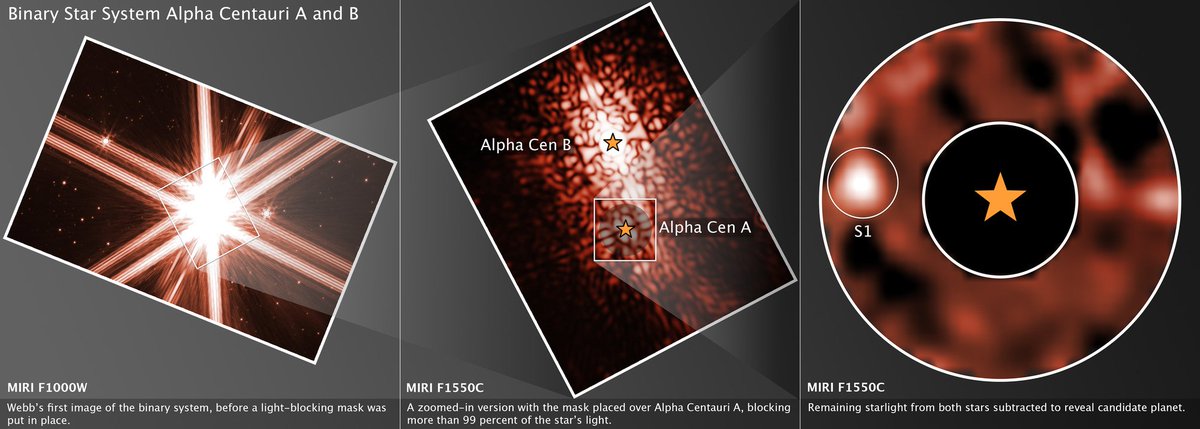

The <a href="/NASAWebb/">NASA Webb Telescope</a> space telescope has found strong evidence of a planet around Alpha Centauri, a near-twin of our Sun in the nearest neighboring star system.
This would also be the closest exoplanet ever observed directly. 

webbtelescope.org/contents/news-…

NASA Armstrong (@nasaarmstrong) 's Twitter Profile Photo

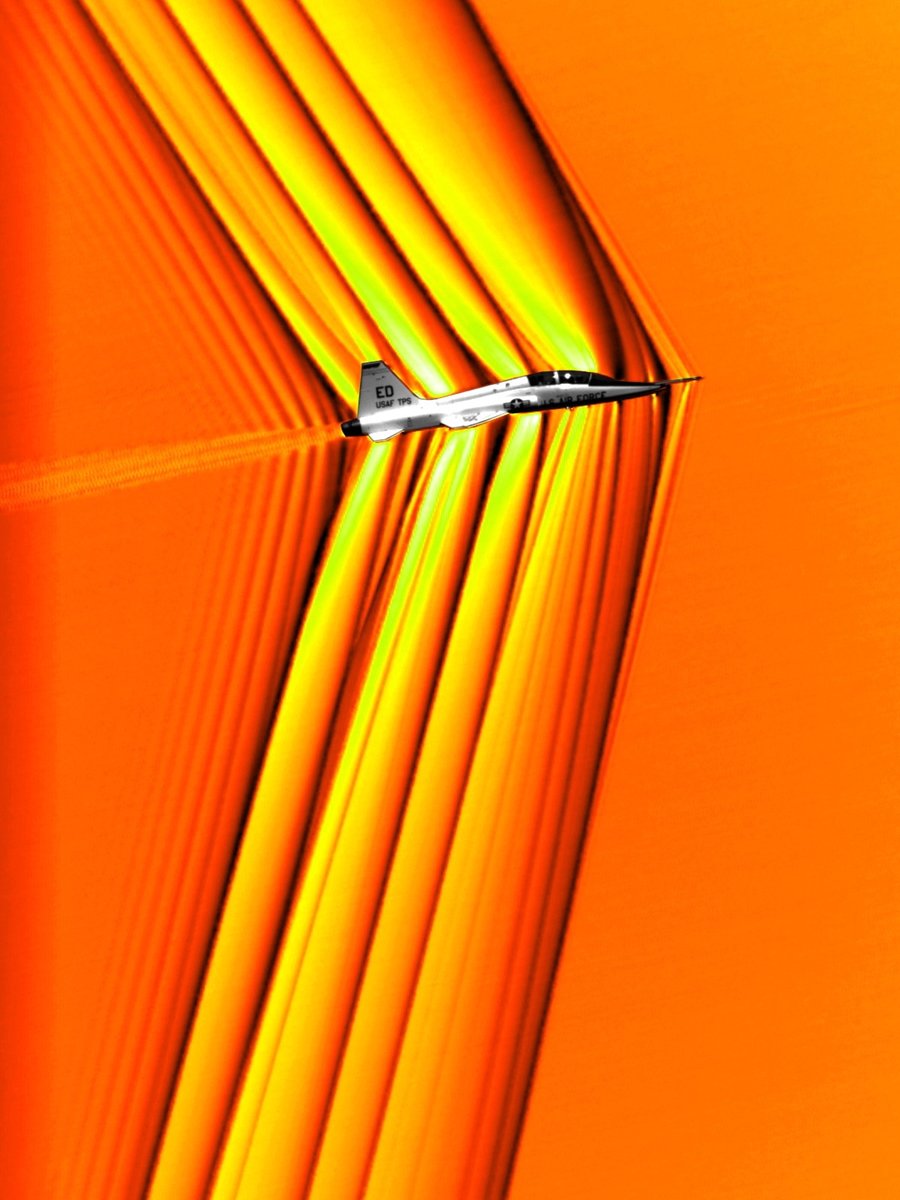
The life of a NASA Flight Research Center ✨ ✈️ Have you heard of schlieren imaging? Schlieren imaging is a technique, seen here in from a flight series called AirBOS, that lets us see invisible airflows – like shock waves and vortices – coming off full-scale airplanes in

The life of a NASA Flight Research Center ✨ ✈️
 
Have you heard of schlieren imaging?
 
Schlieren imaging is a technique, seen here in from a flight series called AirBOS, that lets us see invisible airflows – like shock waves and vortices – coming off full-scale airplanes in
NOIRLab (@noirlabastro) 's Twitter Profile Photo

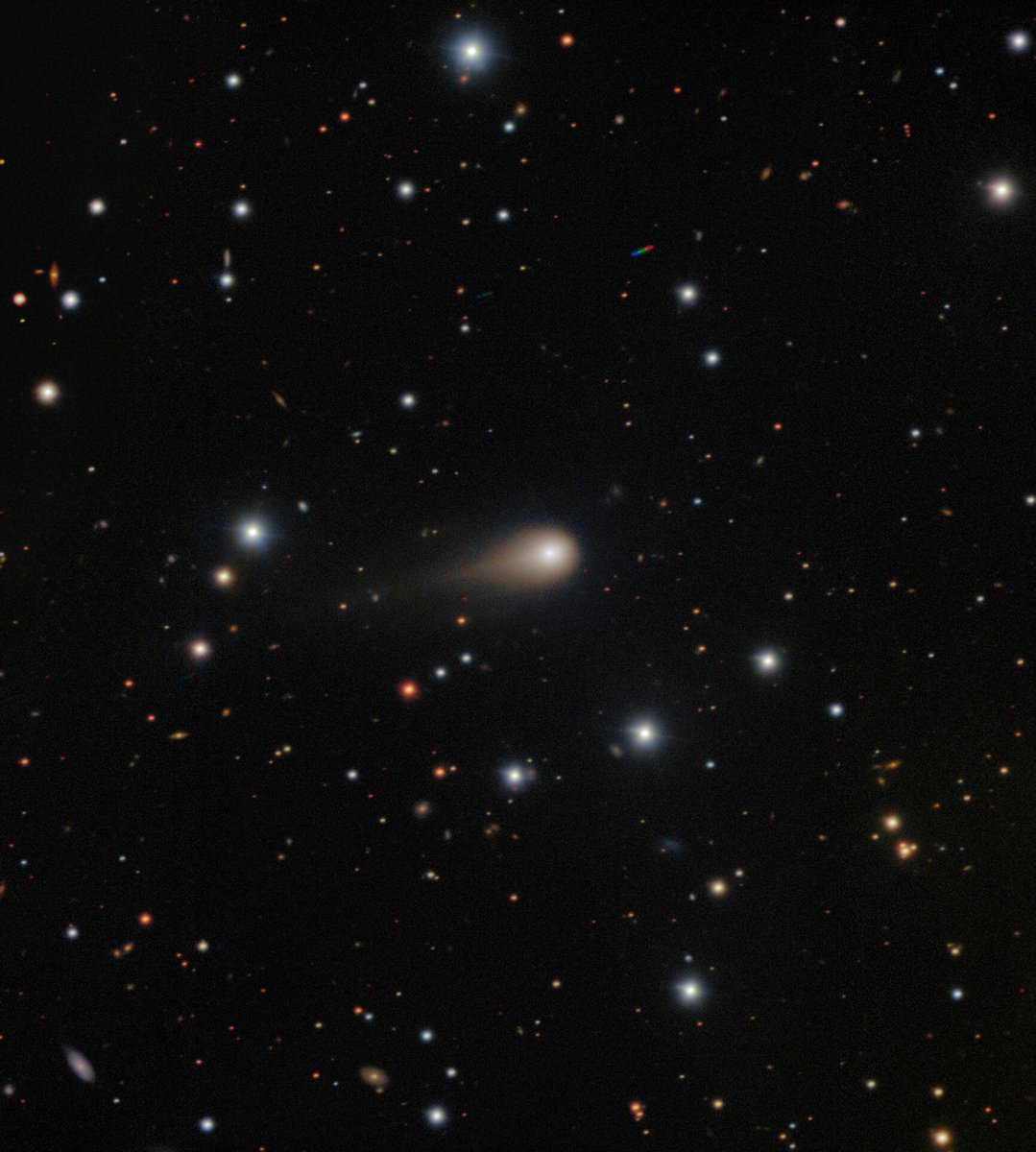
New images of interstellar Comet 3I/ATLAS! ☄️In these new images taken from @Geminiobs South in Chile, you can see the growing tail of the comet and the glowing coma. 🔗 noirlab.edu/public/news/no… Credit: International Gemini Observatory/NOIRLab/NSF/AURA/Shadow the Scientist

New images of interstellar Comet 3I/ATLAS! ☄️In these new images taken from @Geminiobs South in Chile, you can see the growing tail of the comet and the glowing coma.  
🔗 noirlab.edu/public/news/no…

Credit: International Gemini Observatory/NOIRLab/NSF/AURA/Shadow the Scientist
NOIRLab (@noirlabastro) 's Twitter Profile Photo

UGC 12914 and UGC 12915 collided 25 million years ago. Despite their history, they’ve moved on and started building bridges between each other. After their big collision gas was pulled from each galaxy, creating a stream of stellar material. ⭐️ 📸 @GeminiObs/NOIRLab/NSF/AURA

UGC 12914 and UGC 12915 collided 25 million years ago. Despite their history, they’ve moved on and started building bridges between each other. After their big collision gas was pulled from each galaxy, creating a stream of stellar material. ⭐️

📸 @GeminiObs/NOIRLab/NSF/AURA
Rubin Observatory (@vrubinobs) 's Twitter Profile Photo

You might think the night sky is the paparazzi magnet at Cerro Pachón, but it's actually the viscachas. (Ok, it's both.) These local celebrities are a favorite sighting among observatory scientists — they even bask in the sunset glow just like observers do before the night!

You might think the night sky is the paparazzi magnet at Cerro Pachón, but it's actually the viscachas.

(Ok, it's both.)

These local celebrities are a favorite sighting among observatory scientists — they even bask in the sunset glow just like observers do before the night!
Erika  (@explorecosmos_) 's Twitter Profile Photo

The #JWST has provided unprecedented insights into SIMP-0136, a rogue planet approximately 20 light-years from Earth. Unlike planets bound to stars, rogue planets like SIMP-0136 drift freely through space. This study utilized JWST's advanced instruments to examine the planet's

The #JWST has provided unprecedented insights into SIMP-0136, a rogue planet approximately 20 light-years from Earth. 

Unlike planets bound to stars, rogue planets like SIMP-0136 drift freely through space. This study utilized JWST's advanced instruments to examine the planet's
NOIRLab (@noirlabastro) 's Twitter Profile Photo

Our #3 Image of the Week of 2025! 🤩 Comet C/2024 G3 (ATLAS) gleams against the January sky above three NOIRLab-supported telescopes in this image. The las time it was last visible from Earth was about 600,000 years ago. 📷 CTIO/NOIRLab/NSF/AURA/C. Corco

Our #3 Image of the Week of 2025! 🤩

Comet C/2024 G3 (ATLAS) gleams against the January sky above three NOIRLab-supported telescopes in this image. The las time it was last visible from Earth was about 600,000 years ago.

📷 CTIO/NOIRLab/NSF/AURA/C. Corco