

Valentina Santo
@valentsant
Research fellow in Thoracic Oncology @DanaFarber Medical Oncology fellow @CampusBioMedico
ID: 1099066417419354114
22-02-2019 22:00:28
64 Tweet
111 Takipçi
450 Takip Edilen

What about the rare stuff? Biagio Ricciuti, MD, PhD sheds light in what to do in patients with AGAs that could potentially respond to IO, such as MET, BRAF and KRAS. And it would not be Biagio without an opinion on STK11/KEAP1 co-mutations. #ASCO25

Thoughtful discussion in our #ASCO25 session on perioperative approaches in #NSCLC, including rare drivers and hard-to-treat genotypes— alongside stellar faculty Charu Aggarwal, MD, MPH, FASCO & Kaushal Parikh. ASCO Dana-Farber News Narjust Florez, MD, FASCO OncoAlert Marcelo Corassa, MD. Dana-Farber
I truly regret having missed Biagio Ricciuti, MD, PhD ’s talk on emerging biomarkers in early-stage #NSCLC at ASCO, though I have no doubt it was outstanding! He is a force of nature: a brilliant scientist, an inclusive leader, and an admirable mentor 💫 Dana-Farber's Lowe Center for Thoracic Oncology is lucky to have



Happy to share our latest work - the result of a collective effort by our Italian Lung Cancer Network group in Lazio! A concrete example of regional collaboration in clinical research! Valentina Santo mdpi.com/3379680 #mdpicancers via Cancers MDPI MDPI
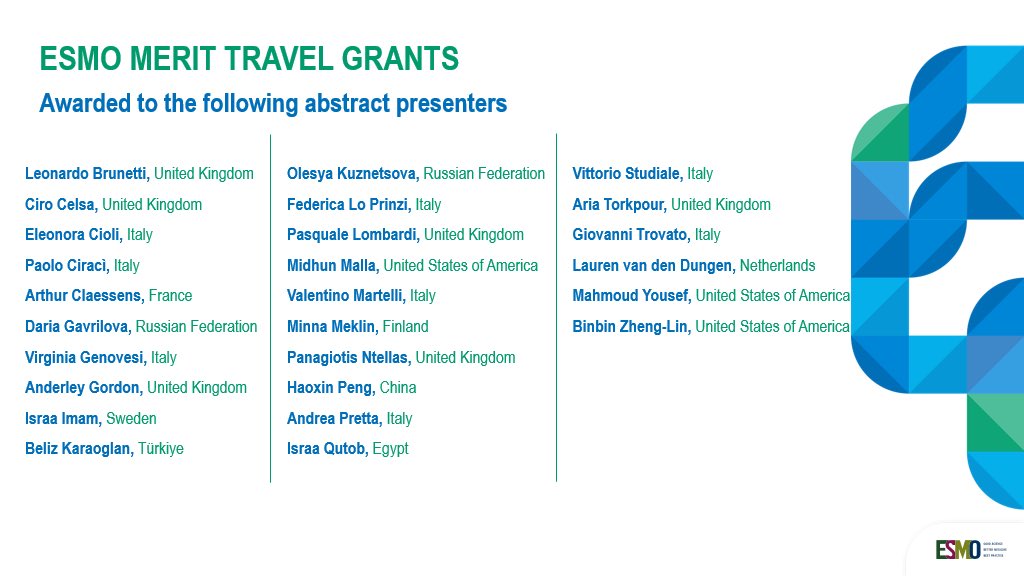
My deepest congrats to all #YoungOncologist who secured a ESMO - Eur. Oncology #MeritTravelGrant to #ESMOGI25 Well done everyone 👏🏻👏🏻 #ESMOAmbassadors

The OncoAlert 🚨 VJ Oncology JOURNAL CLUB This week we have the pleasure to bring you Biagio Ricciuti, MD, PhD of Dana-Farber 🇺🇸 Discussing Neoadjuvant PD-1 and PD-L1 Blockade With Chemotherapy for Borderline Resectable and Unresectable Stage III Non–Small Cell Lung Cancer by Dr.
Are we ready for ultra-precision oncology? 🔬✨ 📖 New online: First-line MET tyrosine kinase inhibitors versus immunotherapy ± chemotherapy for patients with MET exon 14 skipping mutant metastatic NSCLC doi.org/10.1158/1078-0… (with Federica Pecci Biagio Ricciuti, MD, PhD Alfredo Addeo MD

Not all oncogenes are the same. Patients w/ MET-driven NSCLC are frequently smokers and have often high PD-L1. This important study led by Federica Pecci Xiuning Le MD PhD identified factors to tailor treatment sequencing (ICI & MET-TKIs) in this population aacrjournals.org/clincancerres/…
Finally published in Clinical Cancer Research our multicenter study on the optimal first-line treatment for patients with MET exon 14 skipping NSCLC. Dr.Hui Li, Biagio Ricciuti, MD, PhD Xiuning Le MD PhD tinyurl.com/4kwdzpu9
Couldn't be prouder of Leonardo Brunetti and Valentina Santo presenting their work at #wclc2025! Two great residents from UCBM now boosting their research skills and career path abroad with 2 great mentors and friends Biagio Ricciuti, MD, PhD and David James Pinato 🇺🇦 ❤️😍🇮🇹

Closing out #WCLC25 with gratitude for physician–scientist Alessandro Di Federico and our fellows Edoardo Garbo, Valentina Santo, #EleonoraGariazzo I’m lucky to work with, who presented studies to help move us closer to more personalized treatments for patients with lung cancer. 👏🌍#IMG

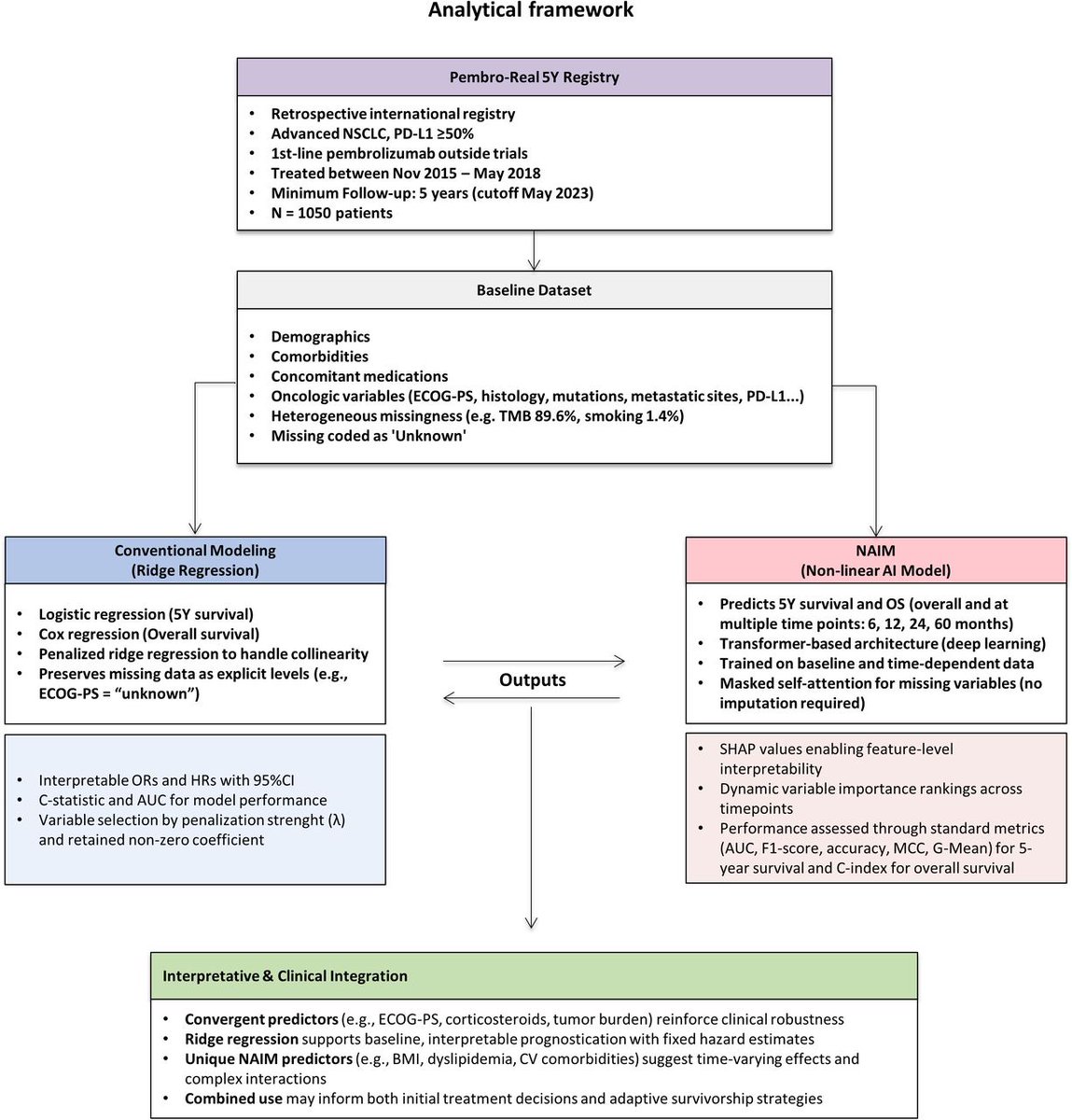
📢Out now in Journal for ImmunoTherapy of Cancer! Global Pembro-5Y registry (61 centers, 14 countries) + advanced stats & AI 👇 1) In modern day oncology (1/4 patients alive at 5y) Prognosis is dynamic, not static 2) AI reveals time-dependent complexity 3) Comorbidities regain importance over time


New #JITC article: Transformer-based AI approach to unravel long-term, time-dependent prognostic complexity in patients with advanced NSCLC and PD-L1 ≥50%: insights from the pembrolizumab 5-year global registry bit.ly/47b6Ewa Alessio Cortellini David James Pinato 🇺🇦 So Yeon (Lydia) Kim, MD, MS

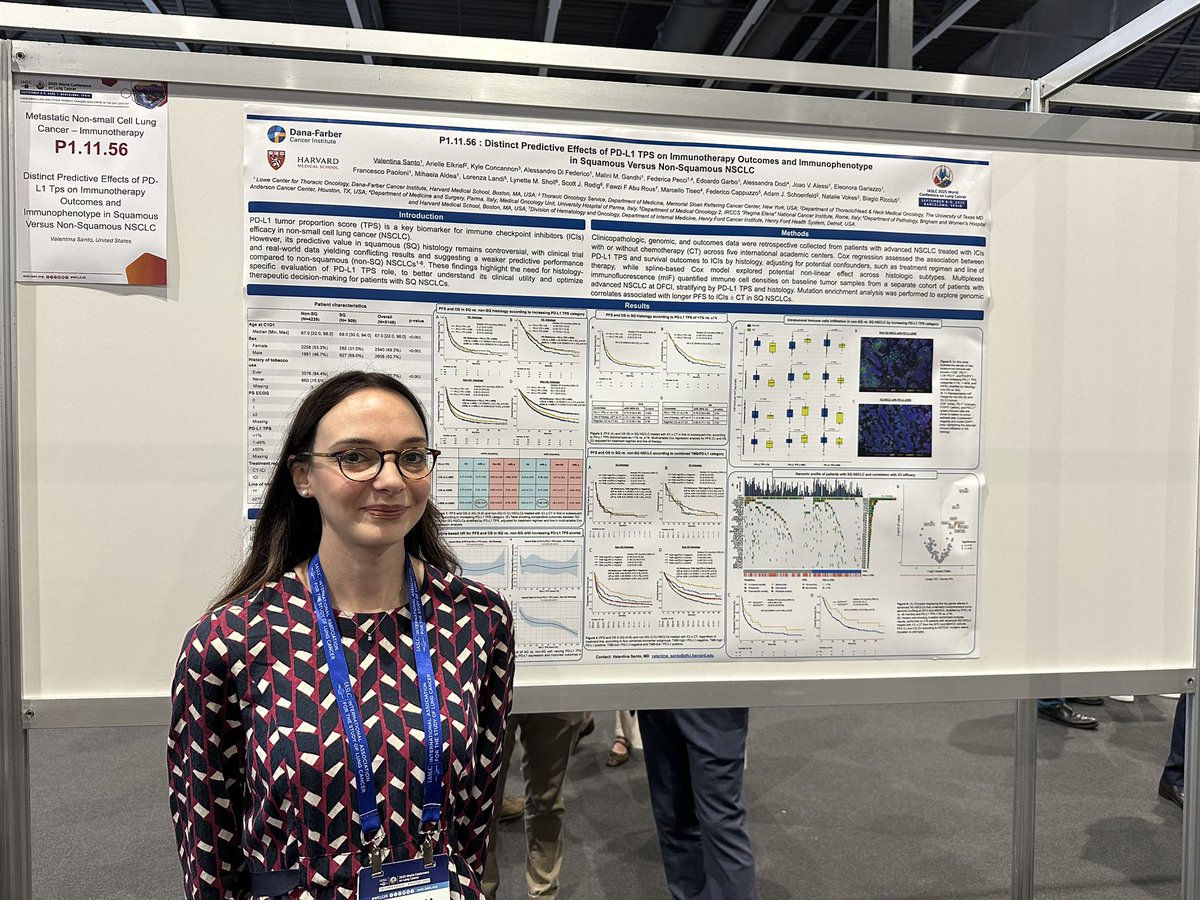
🎥Valentina Santo of Dana-Farber shares findings on how PD-L1 tumor proportion score (TPS) predicts survival differently across #NSCLC subtypes: ⭐TPS shows stepwise benefit in non-squamous disease, but acts as a dichotomous marker in squamous histology
Out on Lung Cancer Journal 👇 Despite overall poor prognosis, 13% of pts with #NSCLC and PS≥2 reached 5-year OS with IO mono (PD-L1 high setting) Out of ~40 variables, none alone explains it while AI reveals a complex, dynamic prognosis driven by more than disease-related factors